West Bengal Bars Admissions at 38 Pharmacy Colleges; 337 B.Ed Colleges Get Approval for 2026–28
Published 5 Nov 20264 min read
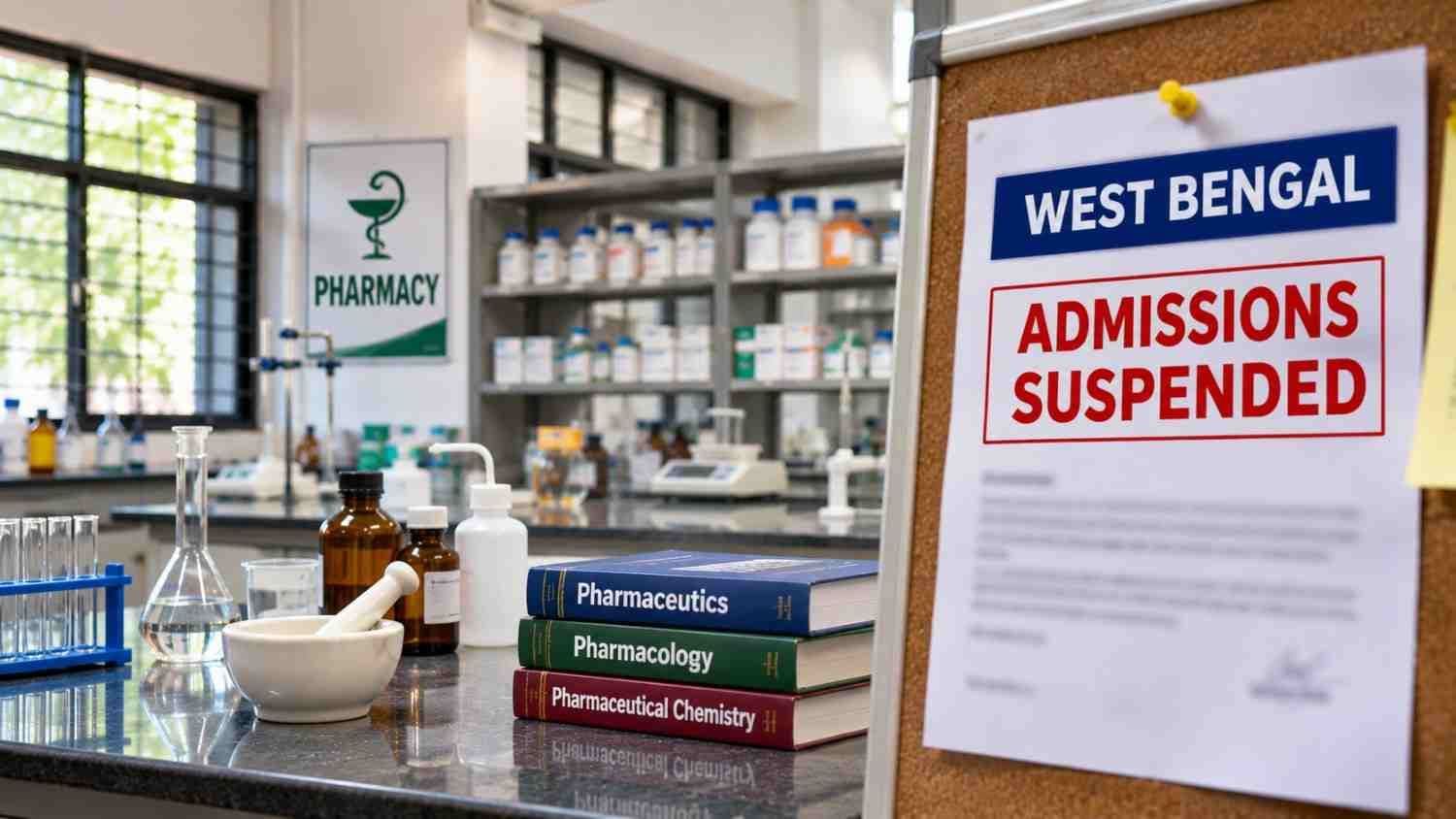
West Bengal has barred 38 pharmacy colleges from admitting students for the 2026–27 academic year following inspections of 134 institutions offering DPharm and BPharm courses. Separately, 337 B.Ed colleges cleared a second inspection and have been allowed to begin admissions for the 2026–28 session from November 4, 2026. The action also includes de-affiliation of 14 Industrial Training Institutes (ITIs) and admission restrictions at one polytechnic institution.
Education Minister Jaganath Chattopadhyay announced the inspection outcomes on November 5, 2026. He said the drive followed Chief Minister Suvendu Adhikari's direction to ensure that education is not treated as a commercial activity and that academic standards are maintained .
Key Numbers at a Glance
| Institution Type | Inspected | Action Taken |
|---|---|---|
| Pharmacy Colleges | 134 | 38 barred from admission (2026–27) |
| B.Ed Colleges | — | 337 approved for 2026–28; 205 barred |
| ITIs | 265 | 14 de-affiliated |
| Polytechnic Institutions | 74 | 1 barred from admission |
Sources: Careers360, The Statesman
Pharmacy Colleges: 38 Barred from Admission
Of the 134 pharmacy colleges inspected, 38 have been directed not to admit students for the current academic year. The action covers both Diploma in Pharmacy (DPharm) and Bachelor of Pharmacy (BPharm) courses .
An earlier inspection report noted that only five of 134 pharmacy colleges met full operational standards, with 81 institutions granted conditional approval as a special consideration for the year .
What students should do: Before paying any admission fee, confirm that your chosen pharmacy college has permission to admit students for 2026–27. The list of barred institutions is expected to be available with the Higher Education Department and the affiliating university.
B.Ed Colleges: 337 Approved After Second Inspection
The B.Ed approval process involved two rounds of inspection. In the first round, 156 colleges were approved, while 451 failed to meet quality standards. After these colleges were asked to improve infrastructure and performance, a second inspection was conducted with a different panel of inspectors. Of the colleges that responded, 337 were approved to begin admissions for the 2026–28 session from November 4, 2026 .
However, 205 B.Ed colleges that failed to meet the prescribed requirements have been barred from admitting students for 2026–28. These institutions have been directed to address their deficiencies so they can qualify for the 2027–29 session .
The Baba Saheb Ambedkar Education University (BSAEU) is the regulatory body for B.Ed colleges in West Bengal. Affiliation renewal is contingent on meeting infrastructure, faculty, and compliance standards .
ITIs and Polytechnic: Action Against 14 ITIs, 1 Polytechnic
The inspection exercise also covered technical education institutions:
ITIs: Of 265 inspected, 14 were de-affiliated for lacking basic infrastructure. An earlier report noted that these ITIs were found to exist "only on paper" .
Polytechnic: Of 74 institutions inspected, one was directed to stop admissions .
The Minister noted that inspections revealed irregularities, including multiple institutions sharing a single address—a red flag for operational authenticity .
What This Means for Students
Pharmacy aspirants: Verify your college's admission approval before proceeding. Joining a barred institution will not result in a valid admission for 2026–27.
B.Ed aspirants: Check whether your chosen college appears on the approved list for 2026–28. The 337 approved colleges can admit from November 4, 2026.
ITI and polytechnic aspirants: Confirm affiliation status with the institution and the relevant regulatory body before enrolling.
General principle: The state government's action signals stricter enforcement of infrastructure and quality norms. Students should prioritise verified institutions over unapproved ones, even if the latter offer lower fees or easier admission.
The government has stated that institutions failing to meet standards may receive permission in later academic years if they improve infrastructure and teaching facilities. For now, the key distinction for applicants is whether their college holds admission approval for the session they plan to join.