
SLAT 2027 Preparation Guide: Pattern, Syllabus, Strategy and Mock Plan


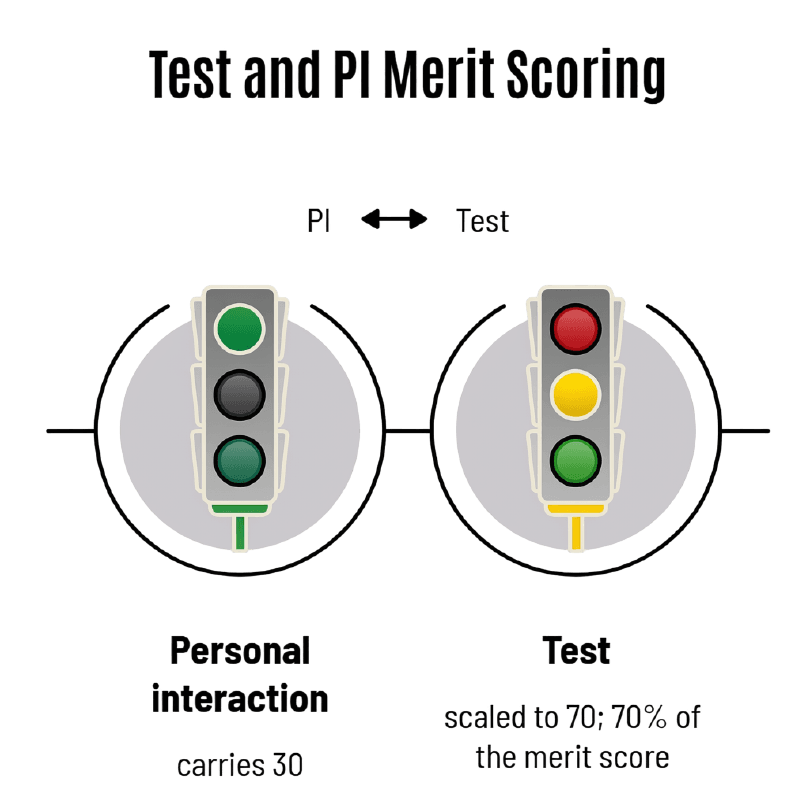
SLAT 2027 is a 60-question, 60-minute, 60-mark test with five equal sections of 12 questions: Logical Reasoning, Legal Reasoning, Analytical Reasoning, Reading Comprehension and General Knowledge. There is no negative marking, so attempt everything. SLAT 2027 is on 19 and 26 December 2026 for admission to Symbiosis law schools. The test is 70% of your merit score and the personal interaction is 30%. Most marks come from steady practice in reading, reasoning and basic arithmetic, not from legal knowledge.
SLAT 2027 at a glance
Item | Detail |
| Conducted by | Symbiosis International (Deemed University); official site: slat-test.org |
| Programmes | Nine programmes across Symbiosis Law Schools: Pune (3), Noida (2), Hyderabad (2), Nagpur (2) |
| Test dates | Test 1: Saturday 19 Dec 2026. Test 2: Saturday 26 Dec 2026 |
| Registration | Opened 1 Sep; closes Friday 4 Dec 2026 (payment included) |
| Admit cards | 11 Dec (Test 1), 18 Dec (Test 2) |
| Official mock | Sunday, 22 Nov 2026, 10 am to 7 pm, one attempt, only for applicants registered and paid by 15 Nov, 11:59 pm |
| Result | 12 Jan 2027, online until 12 Feb. Check site. |
| Fees | Rs 2,550 per test date and Rs 1,000 per programme per institute, non-refundable; taxes as applicable |
Dates and fees are from the official SLAT pages as read on 8 November 2026. Check slat-test.org before paying, because dates have changed more than once this cycle.
Who can take SLAT 2027
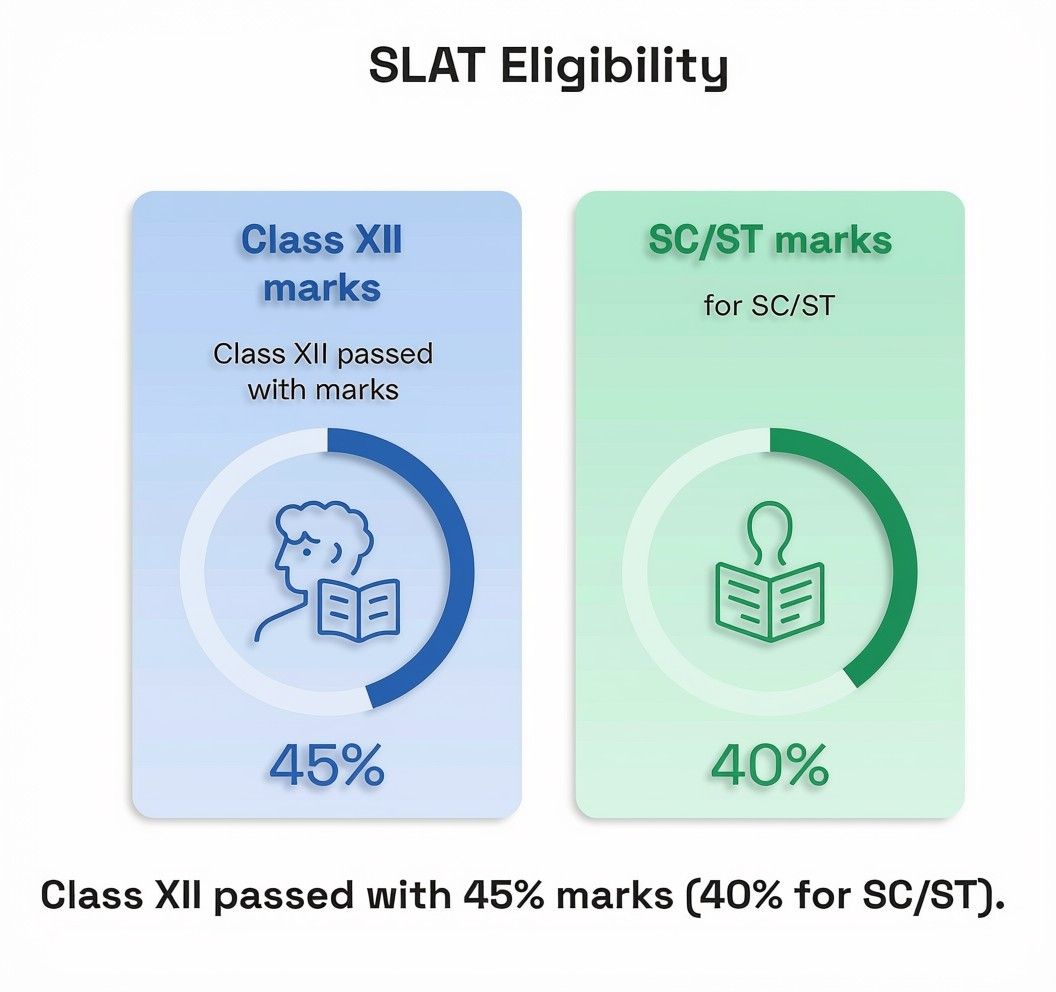
- Class XII passed with 45% marks (40% for SC/ST), according to the official eligibility page.
- Persons with disabilities get 20 minutes of extra time per hour.
Eligibility lets you sit the test. Each programme sets its own merit cut-off, so check the programmes you want before you choose them.
The paper in numbers
Section | Questions | Marks | Minutes if shared equally |
| Logical Reasoning | 12 | 12 | 12 |
| Legal Reasoning | 12 | 12 | 12 |
| Analytical Reasoning | 12 | 12 | 12 |
| Reading Comprehension | 12 | 12 | 12 |
| General Knowledge | 12 | 12 | 12 |
| Total (60 minutes) | 60 | 60 | 60 |
Questions are MCQs with four options. Each section is mandatory, and you can attempt sections in any order. The equal-minutes column is our arithmetic; you decide the real split.
No negative marking. A blind guess on a four-option question is worth 0.25 marks. If you truly know 40 questions and guess the other 20, you expect about 5 extra marks, a score near 45; leaving them blank guarantees 40. Attempt every question.
From score to admission
- The 60-mark test is scaled to 70, and the personal interaction (PI) carries 30, so the test is 70% of the merit score at every Symbiosis law school.
- One raw mark is worth about 1.17 merit points (70 ÷ 60). A raw 48 becomes 56 out of 70 (our arithmetic).
- Candidates are shortlisted for the PI on test marks, and each programme sets its own cut-off. A candidate who skips any PI component is left out of the merit list.
- You can take both tests, and the higher score counts. The second test is insurance against a bad day, but registration closes before either test, so you must choose one test or two in advance.
The official page says scores are not normalised, while another line says the papers are normalised for difficulty. The likeliest meaning is that the two papers are built to be equivalent, but that is our reading, not theirs.
What SLAT 2026 asked
The 2026 paper (held 20 and 28 December 2025) was widely rated easy to moderate. SIU publishes no analysis, so everything below is from coaching reviews and is a range, not a rule.
Section | Topics reported | Reported level | Good attempts |
Logical Reasoning | Blood relations, number series, simple puzzles, analogies, assertions, arguments and conclusions; no syllogisms in some analyses | Easy to moderate; moderate to difficult in some | 9–10 |
Legal Reasoning | Principle-and-fact questions on torts (negligence), contracts, criminal law basics and constitutional provisions; no prior legal knowledge needed | Easy to moderate | 9–11 |
Analytical Reasoning | Series, profit and loss, time and work, ratios, interest, speed, time and distance, arrangements, percentages | Moderate to difficult; most time-consuming | 7–10 |
Reading Comprehension | About 3–4 passages on law, history, and general topics; factual, with vocabulary | Easy | 11–12 |
General Knowledge | Current affairs of the past few months plus static GK (geography, history, economics, polity) | Easy to moderate | 8–11 |
Good-attempt ranges differ between slots and analyses. A score of 45 or more was described as competitive in one review; expected SLS Pune cut-offs ranged from 45–48 to 50–55 across sources. SIU publishes no cut-offs.
Section strategy for SLAT
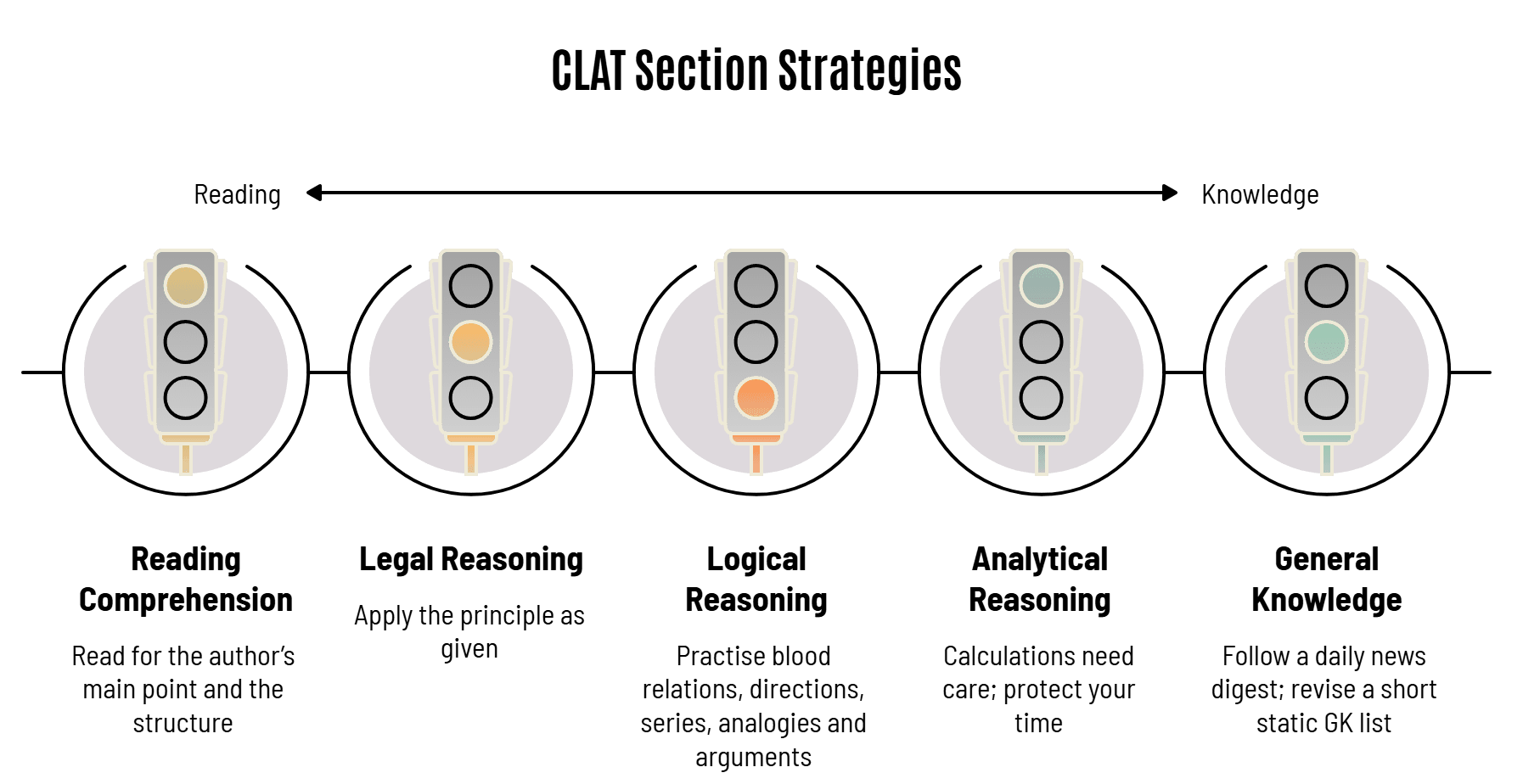
Reading Comprehension: bank the easy marks
This is the most reliable section. Read for the author’s main point and the structure of each passage, then answer from the text, not from memory. Build the base: read an editorial or long article daily, solve one or two passages, and revise vocabulary, since the section is not purely about speed.
Legal Reasoning: apply the principle to the facts.
Questions give a legal principle and a fact situation; you apply the principle as given, even if it differs from real law. Do not bring outside knowledge. Build the base: learn basic ideas in torts (negligence), contract and criminal law, plus a few constitutional articles, and practise principle-fact questions daily.
Logical Reasoning: know the formats.
Practise blood relations, directions, series, analogies and arguments until the formats feel familiar. Argument questions reward careful reading of what the stem actually claims. Build the base: a small set of mixed questions every day, with each wrong one traced to a rule you missed.
Analytical Reasoning: protect your time.
Concepts are basic, but calculations need care, and this section ate the most time in the 2026 reviews. Use a switch rule: if a question has not opened up in about a minute, mark it, move on, and return. Build the base: percentages, ratios, profit and loss, time and work, speed and distance, simple interest, and basic arrangements.
General Knowledge: steady, not cramming
Expect a mix of static GK and recent current affairs. Build the base: follow a daily news digest for the last few months before the test and revise a short static GK list (geography, history, economy, polity, awards, organisations). Do not skip it: it is quick marks.
A time budget to test, not to trust
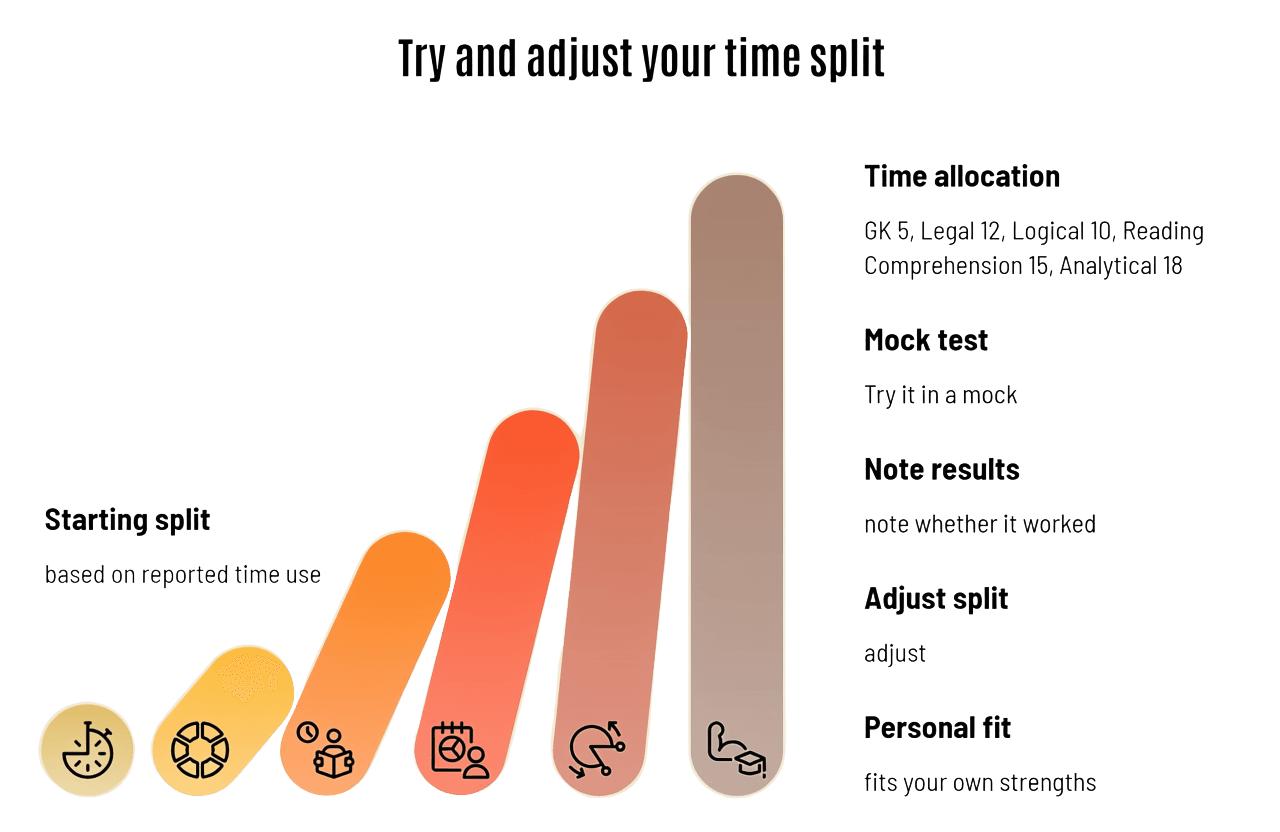
A starting split based on reported time use is GK 5, Legal 12, Logical 10, Reading Comprehension 15, and Analytical 18, which sums to 60. Try it in a mock, note whether it worked, and adjust. The right split is the one that fits your own strengths.
Where are you in the preparation?
These phases are a general framework, not an official plan. Adjust them to your starting point.
6 months out or more: Build the base: daily reading, basic arithmetic, logical reasoning formats, and legal principles.
3 to 6 months out: Start timed sectional sets. Add current affairs and static GK. Begin a mistake log.
Last 30 days: Take full 60-minute sets under exam conditions, analyse every one and fix your weakest two sections. Use the official mock if you qualified for it.
Last 2 weeks: Timed sets only. Decide one test or two, and choose programmes and cities. Finish payment before the registration deadline.
Final days: Light revision. Collect the admit card, print it in colour, visit the centre if you can, sleep.
How many mocks? There is no official number. One coaching guide suggests at least three full-length mocks before Test 2. Because the paper is only 60 minutes, you can run many timed sets, but the gain comes from analysing each one.
The official mock
- Sunday 22 November 2026, available 10 am to 7 pm, one attempt in a single sitting, on one device (desktop or laptop recommended).
- Only applicants who registered and paid by 15 November, 11:59 pm get the login, via SMS, WhatsApp, and email.
- Format: 60 MCQs in five sections of 12, with free movement between sections, Mark for Review, and a submission summary.
- The page does not state the mock’s duration or whether it has negative marking. Third-party sites say one hour. Practise as if there is none.
There is no free public official mock. If an ad offers a "SLAT mock" to anyone, it is a coaching product, not SIU’s.
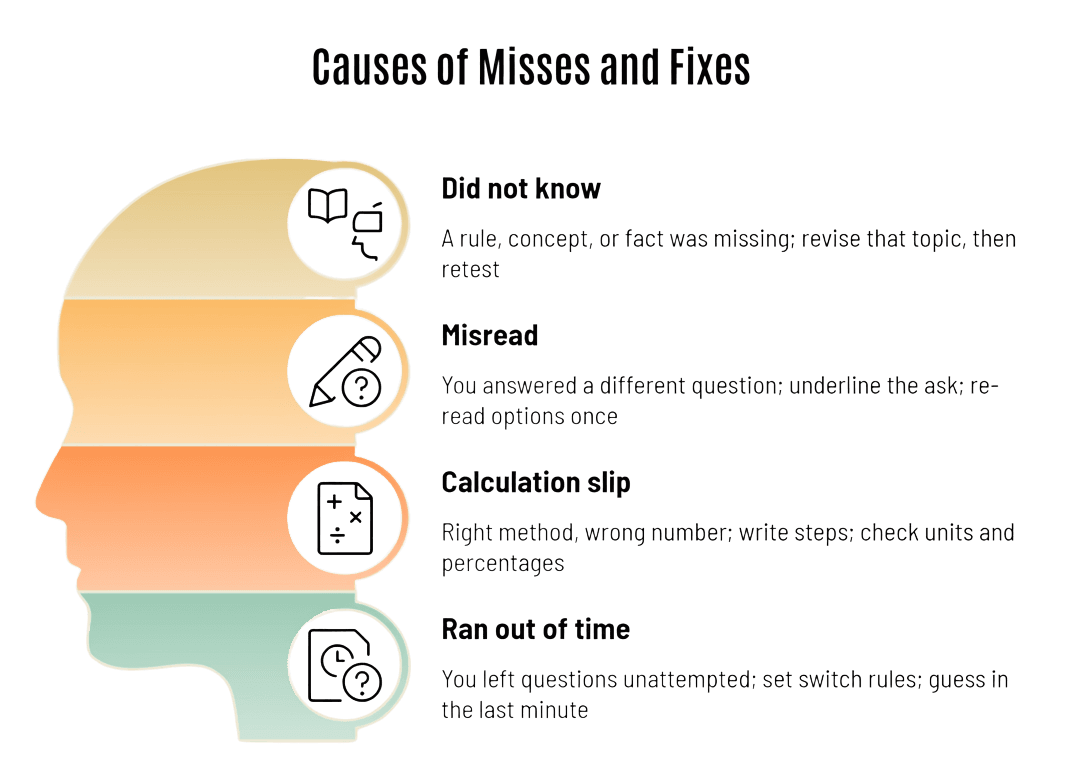
The mistake audit
Cause | What it looks like | Fix |
Did not know | A rule, concept, or fact was missing. | Revise that topic, then retest. |
Misread | You answered a different question. | Underline the ask; reread options once. |
Calculation slip | Right method, wrong number | Write steps; check units and percentages. |
Ran out of time | You left questions unattempted. | Set switch rules; guess in the last minute. |
Count misses by section. The section with the most "ran out of time" misses is where your 60 minutes leak, and it is probably analytical reasoning.
What it costs
You choose | Test fee | Programme fee | Total |
| One test, one programme | Rs 2,550 | Rs 1,000 | Rs 3,550 |
| Both tests, one programme | Rs 5,100 | Rs 1,000 | Rs 6,100 |
| Both tests, all nine programmes | Rs 5,100 | Rs 9,000 | Rs 14,100 |
Taxes extra as applicable. The site says no changes are allowed after registration, and earlier payment improves your chances of getting the date and city you want.
SLAT Exam day
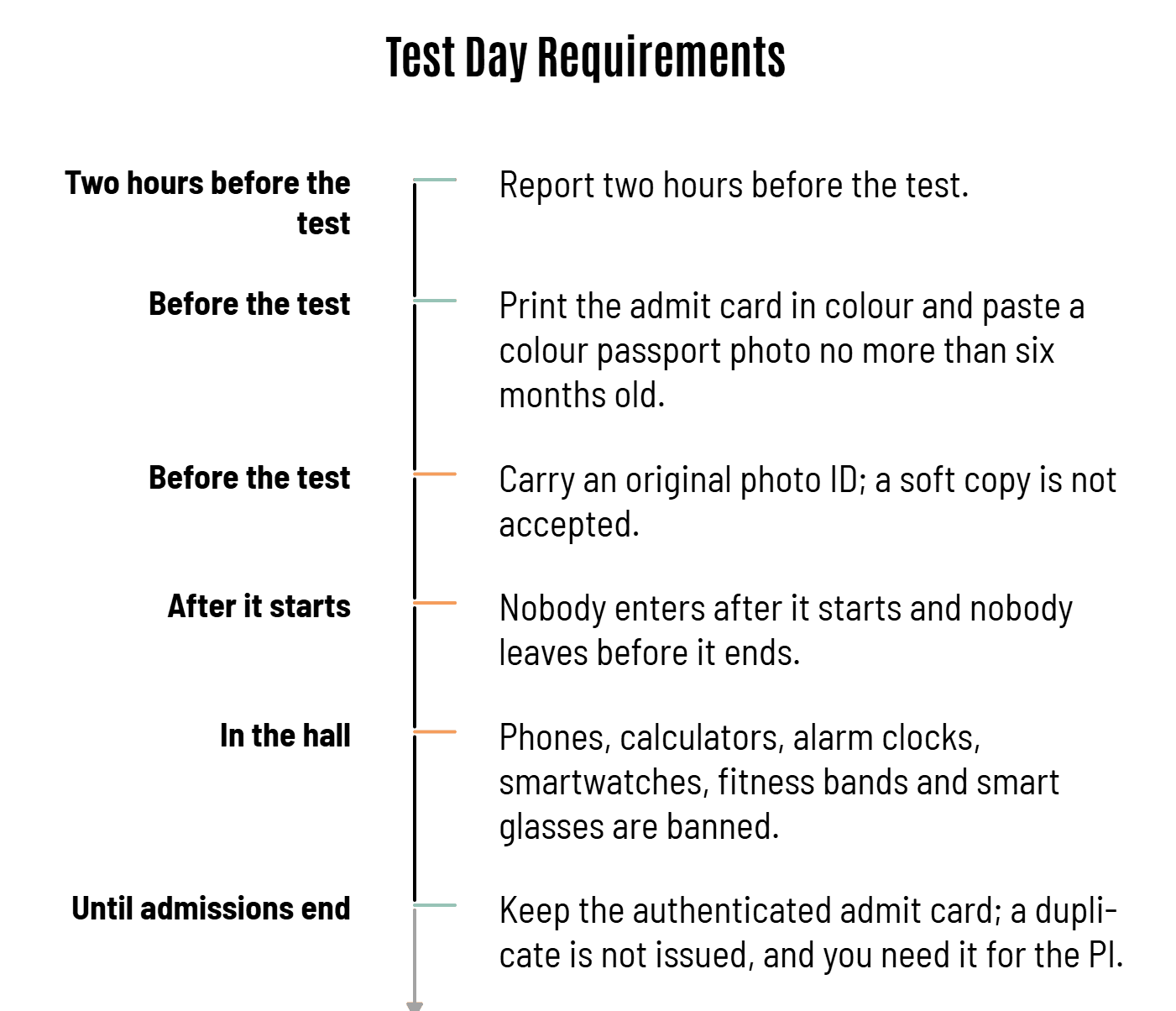
Report two hours before the test. No one enters after it starts, and no one leaves before it ends.
- Print the admit card in colour (black and white is not accepted) and paste a colour passport photo no more than six months old.
- Carry an original photo ID (passport, driving licence, voter ID, PAN, Aadhaar or college ID). A soft copy is not accepted.
- Phones, calculators, alarm clocks, smartwatches, fitness bands and smart glasses are banned in the hall.
- Keep the authenticated admit card until admissions end. No duplicates are issued, and you need it for the PI.
Before you pay any fee, open slat-test.org and check. Dates, fees and rules are from the site’s Mock Test, Important Dates, Test Structure, Registration and Eligibility pages as read on 8 November 2026. Last year’s topics, difficulty, good attempts and cut-offs are estimates from coaching reviews of SLAT 2026. Preparation phases, the time budget and the arithmetic are ours.
Conclusion
SLAT 2027 is a test of speed, accuracy, reading ability and reasoning skills rather than advanced legal knowledge. With 60 questions to solve in 60 minutes and no negative marking, candidates should focus on attempting every question while managing their time effectively. Reading Comprehension and Legal Reasoning can help secure consistent marks, while Analytical Reasoning requires regular practice to improve calculation speed and accuracy.
A well-planned preparation strategy should include daily reading, basic arithmetic, logical reasoning practice, current affairs revision and timed mock tests. Candidates should also analyse their mistakes after every mock to identify weak areas and improve performance. Since the SLAT score contributes 70% to the final merit score and the Personal Interaction accounts for the remaining 30%, preparation should cover both stages.
The key to performing well in SLAT 2027 is consistent practice, smart time management and a clear understanding of the exam pattern. Candidates should keep track of official notifications, complete registration before the deadline and prepare systematically to improve their chances of securing admission to their preferred Symbiosis Law School.