
Top Medical Colleges in Maharashtra 2026: Rankings, Fees & NEET Cutoffs

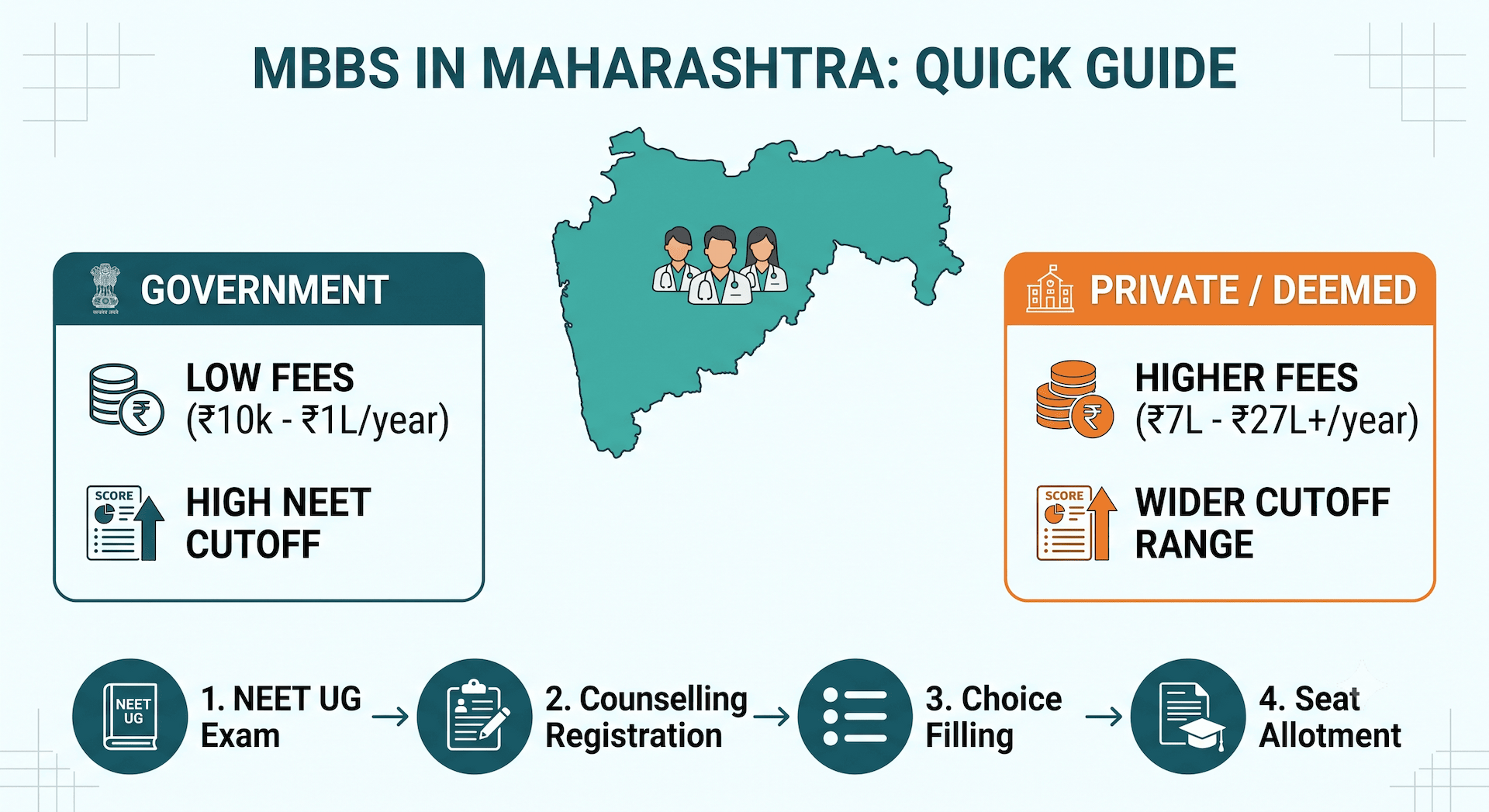
Table of Contents
- What Are Medical Colleges in Maharashtra?
- Why Maharashtra Is a Top Choice for MBBS
- How Admission Works: NEET Counselling Explained
- Top Government Medical Colleges in Maharashtra
- Top Private Medical Colleges in Maharashtra
- Government vs Private: Side-by-Side Comparison
- NEET Cutoffs (2025 Trends for 2026 Planning)
- Cost of Studying at Medical Colleges in Maharashtra
- How to Choose the Right Medical College
- Common Mistakes Students Make
- Step-by-Step Guide to Applying
- Future of Medical Education in Maharashtra
- Expert Insights
- FAQs
- Conclusion
Introduction
Choosing among the many medical colleges in Maharashtra is one of the biggest decisions a NEET aspirant will make it shapes not just where you study, but the quality of clinical exposure, the fees your family will pay, and the doors that open after your internship.
Maharashtra is one of India's largest medical education hubs. The state runs 43 government medical colleges (including AIIMS Nagpur, AFMC Pune, and ESIC Andheri) alongside dozens of private and deemed universities, together offering well over 11,000 MBBS seats every year. Mumbai and Pune alone host some of the oldest and most respected teaching hospitals in the country, including KEM, JJ, and Sassoon.
This guide brings together official counselling data, NIRF rankings, and current fee structures to help you compare the top medical colleges in Maharashtra government and private and make an informed, realistic choice based on your NEET score, budget, and career goals.
What Are Medical Colleges in Maharashtra?
Medical colleges in Maharashtra are NMC-approved institutions offering MBBS, BDS, BAMS, and postgraduate medical degrees, regulated jointly by the state's Directorate of Medical Education and Research (DMER) and the National Medical Commission (NMC).
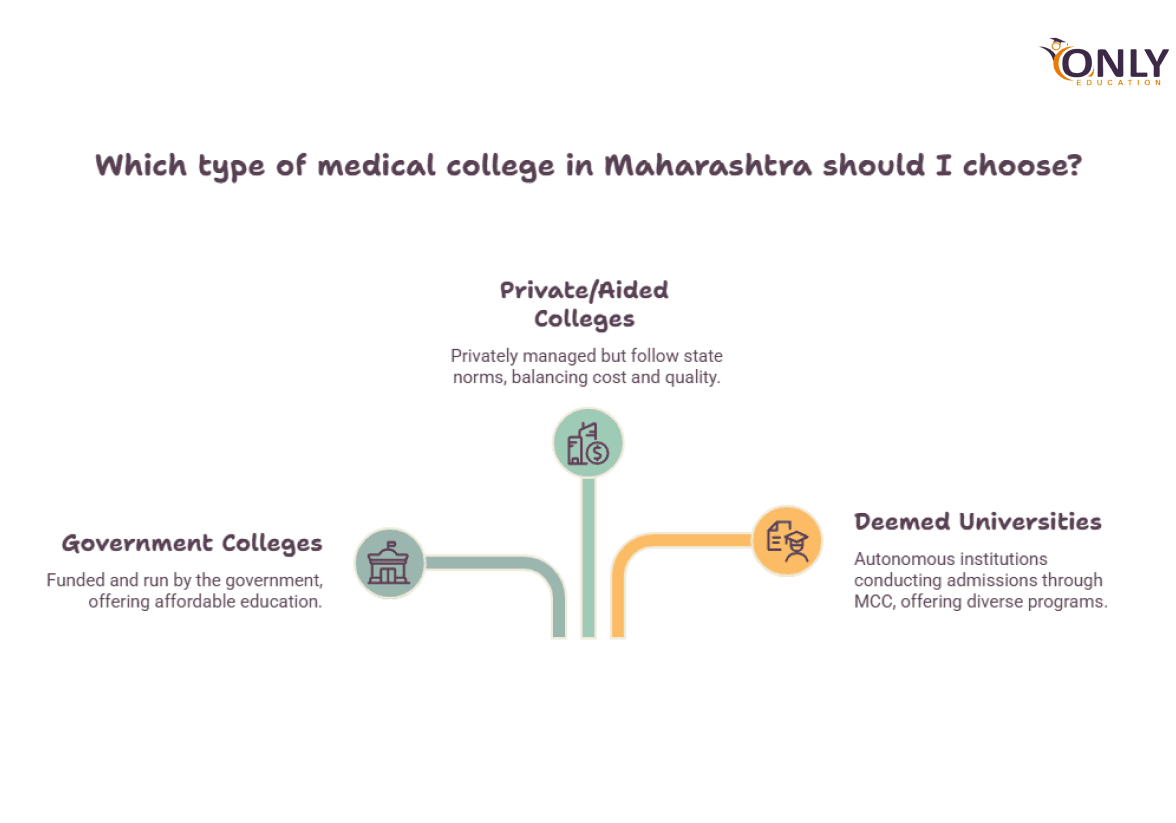
They fall into three broad categories:
- Government colleges funded and run by the state or central government (e.g., Seth GS Medical College, AFMC Pune, AIIMS Nagpur).
- Private/aided colleges privately managed but following DMER's state quota fee and admission norms.
- Deemed universities autonomous institutions (e.g., DY Patil, Bharati Vidyapeeth, Symbiosis) that conduct admissions through the Medical Counselling Committee (MCC) rather than the state CET cell.
All three categories require a valid NEET UG score for admission there is no separate entrance test for MBBS in Maharashtra.
Why Maharashtra Is a Top Choice for MBBS
Maharashtra ranks among the top three Indian states for medical education, largely because of its density of century-old teaching hospitals, strong faculty pool, and consistent NIRF representation.
Key reasons students prioritize the state:
- Historic teaching hospitals Grant Medical College (est. 1845) and its affiliated JJ Hospital are among Asia's oldest medical institutions, giving students exposure to extremely high patient volumes.
- Strong NIRF presence Maharashtra secured multiple positions in the national Top 50 medical rankings in NIRF 2025, one of the highest state representations in the country.
- Balanced quota system: the 85:15 state-to-central quota split gives Maharashtra-domiciled students a real, calculable chance at top colleges.
- Diverse city options Mumbai and Pune concentrate the most sought-after colleges, but Nagpur, Aurangabad, Kolhapur, and Nashik also host strong government and deemed institutions with comparatively lower cutoffs.
- Scholarship and fee-waiver schemes including free MBBS education for eligible EWS/SEBC/OBC category girls whose family income is below ₹8 lakh per year.
How Admission Works: NEET Counselling Explained
Admission to any medical college in Maharashtra requires qualifying NEET UG, followed by one of two parallel counselling tracks depending on the college type.
- State Quota (85% of government + 100% of private-aided seats): Conducted by the Maharashtra CET Cell under DMER guidance. Open only to candidates with valid Maharashtra domicile, except for a small NRI/institutional quota.
- All India Quota (15% of government seats + 100% of deemed university seats): Conducted by the Medical Counselling Committee (MCC), open to candidates nationwide.
Basic Eligibility
- Minimum age of 17 years by December 31 of the admission year.
- Passed 10+2 with Physics, Chemistry, Biology, and English.
- Minimum qualifying marks in PCB: 50% (General), 45% (General-PH), 40% (SC/ST/OBC).
- A valid, qualifying NEET UG score and rank.
Counselling Rounds
Both tracks typically run in four stages Round 1, Round 2, Mop-Up/Round 3, and a final Stray Vacancy round with seat matrices, fee structures, and cutoffs published fresh each round.
Top Government Medical Colleges in Maharashtra
Government medical colleges in Maharashtra remain the most preferred option for NEET aspirants because they combine the lowest fees in the country with some of its busiest, most reputed teaching hospitals.
Maharashtra has 43 government medical colleges as of 2026, including 1 AIIMS (Nagpur), 1 Armed Forces Medical College (Pune), 1 ESIC Medical College (Andheri, Mumbai), and 40 state colleges affiliated with the Maharashtra University of Health Sciences (MUHS), Nashik together offering around 6,075 MBBS seats.
Most Preferred Government Colleges (by State Counselling Choice)
Rank | College | City | Approx. Annual Seats | Affiliated Hospital |
| 1 | Seth GS Medical College | Mumbai | 250 | KEM Hospital |
| 2 | Grant Medical College | Mumbai | 200+ | JJ Hospital |
| 3 | Armed Forces Medical College (AFMC) | Pune | 150 | AFMC Hospital |
| 4 | B.J. Government Medical College | Pune | 200+ | Sassoon General Hospital |
| 5 | Topiwala National Medical College | Mumbai | 150 | Nair Hospital |
| 6 | AIIMS Nagpur | Nagpur | 125 | AIIMS Nagpur Hospital |
| 7 | Government Medical College | Nagpur | 200+ | GMC Nagpur Hospital |
| 8 | Government Medical College | Aurangabad (Chh. Sambhaji Nagar) | 150+ | GMCH Aurangabad |
| 9 | ESIC Medical College | Andheri, Mumbai | 100 | ESIC Hospital |
| 10 | Miraj Government Medical College | Miraj, Sangli | 150 | Civil Hospital, Miraj |
Note: Seat numbers fluctuate slightly each admission cycle based on NMC approvals. Always confirm the current-year seat matrix on the official DMER or MCC portal before finalizing choices.
What Sets These Colleges Apart
- Highest patient load exposure colleges like Seth GS (KEM), Grant Medical College (JJ), and Topiwala National (Nair) run some of the busiest public hospitals in the country, giving students unmatched hands-on clinical training.
- Lowest fees nationally annual government MBBS fees typically fall between ₹10,000 and ₹1 lakh, a fraction of private costs.
- Strong postgraduate pipeline most of these colleges also run 20+ postgraduate specialties, making them attractive for students planning to pursue NEET PG at the same institution.
Top Private Medical Colleges in Maharashtra
Private and deemed medical colleges in Maharashtra suit students who don't clear the government cutoff but still want NMC-recognized, high-quality MBBS education with modern infrastructure.
Private institutions largely fall into two groups: DMER-counselled private colleges (state quota) and MCC-counselled deemed universities (institutional/AIQ quota), each with different fee structures and eligibility rules.
Leading Private & Deemed Universities
College | City | Type | Approx. Fee/Year | Notable Strength |
| Dr. D.Y. Patil Vidyapeeth (DPU) | Pune (Pimpri) | Deemed | ~₹22–27 lakh | NIRF-ranked, large hospital network |
| Bharati Vidyapeeth Deemed University Medical College | Pune | Deemed | ~₹18–24 lakh | NAAC A+ accredited, strong PG programs |
| Datta Meghe Institute of Higher Education & Research (DMIMSU) | Wardha | Deemed | ~₹15–20 lakh | 1,200-bed teaching hospital |
| MGM Medical College | Navi Mumbai / Aurangabad | Deemed | ~₹15–20 lakh | Established multi-campus network |
| Symbiosis Medical College for Women | Pune | Deemed | ~₹18–22 lakh | Women-focused medical education |
| KIMS Karad (Krishna Institute) | Karad | Deemed | ~₹15–18 lakh | Strong rural clinical exposure |
| Terna Medical College | Navi Mumbai | Private | ~₹7–9 lakh | Comparatively budget-friendly |
| Smt. Kashibai Navale Medical College | Pune | Private | ~₹8–12 lakh | Established mid-tier option |
Fee ranges are approximate per-year figures from recent counselling cycles and vary by quota (state, management, or NRI) and academic year always verify current figures on the official college or MCC website.
Why Students Choose Private Colleges
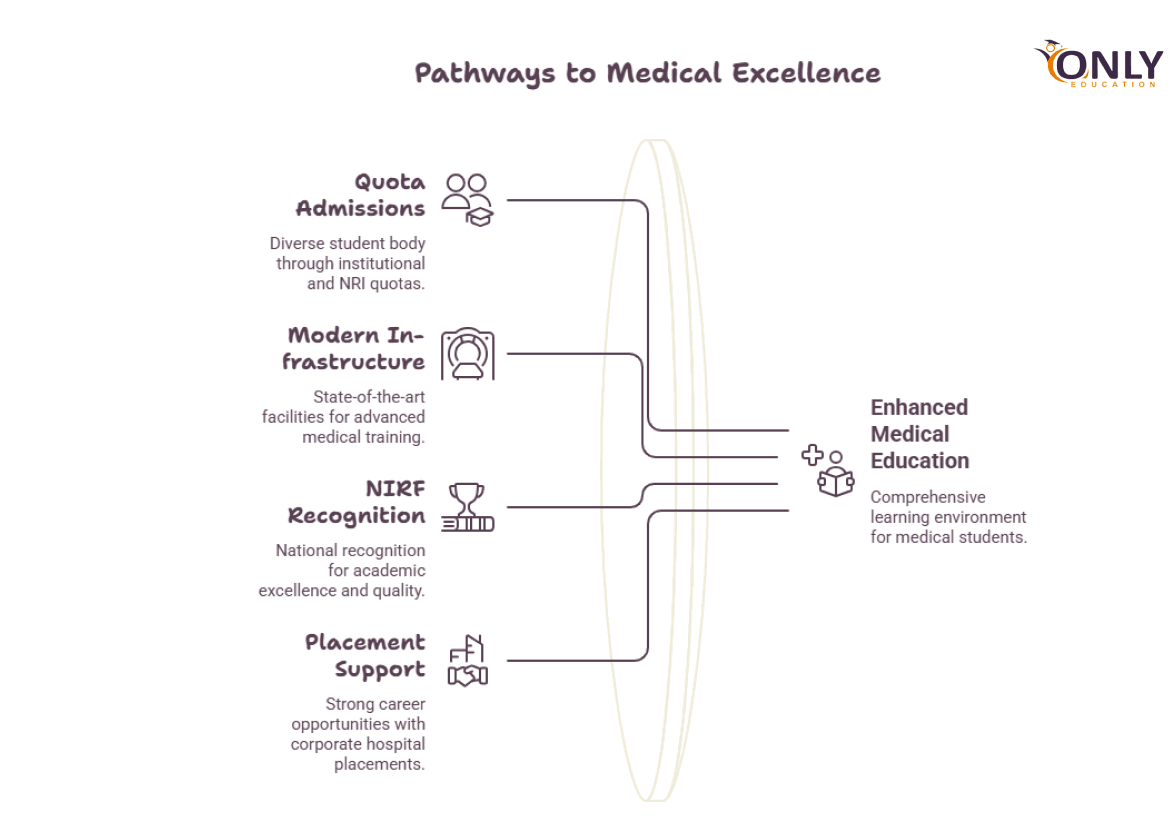
- Institutional/Management and NRI quota-deemed universities admit students from outside Maharashtra, unlike most state-quota government seats.
- Modern infrastructure many private campuses have newer diagnostic equipment, simulation labs, and digital learning tools.
- NIRF recognition institutions like DY Patil Vidyapeeth and Bharati Vidyapeeth regularly feature in the national NIRF medical rankings, signaling recognized academic quality.
- Placement support several private colleges report strong starting packages for graduates entering corporate hospital chains.
Government vs Private: Side-by-Side Comparison
Factor | Government Colleges | Private/Deemed Colleges |
| Counselling Body | DMER/CET Cell (State) + MCC (AIQ) | MCC (Deemed) or DMER (Private-aided) |
| Domicile Requirement | Mandatory for state quota | Not mandatory (Institutional/NRI quota) |
| Annual Fees | ₹10,000–₹1 lakh | ₹7 lakh–₹27+ lakh |
| Seat Availability | Limited, high competition | More seats, wider NEET score range |
| Clinical Exposure | Very high (century-old public hospitals) | High to moderate (varies by college) |
| Best Suited For | High NEET rank, Maharashtra domicile | Moderate NEET rank, budget for higher fees |
NEET Cutoffs (2025 Trends for 2026 Planning)
NEET cutoffs for medical colleges in Maharashtra vary sharply by college tier, category, and quota, but general-category aspirants targeting top Mumbai or Pune government colleges typically need scores well above 600.
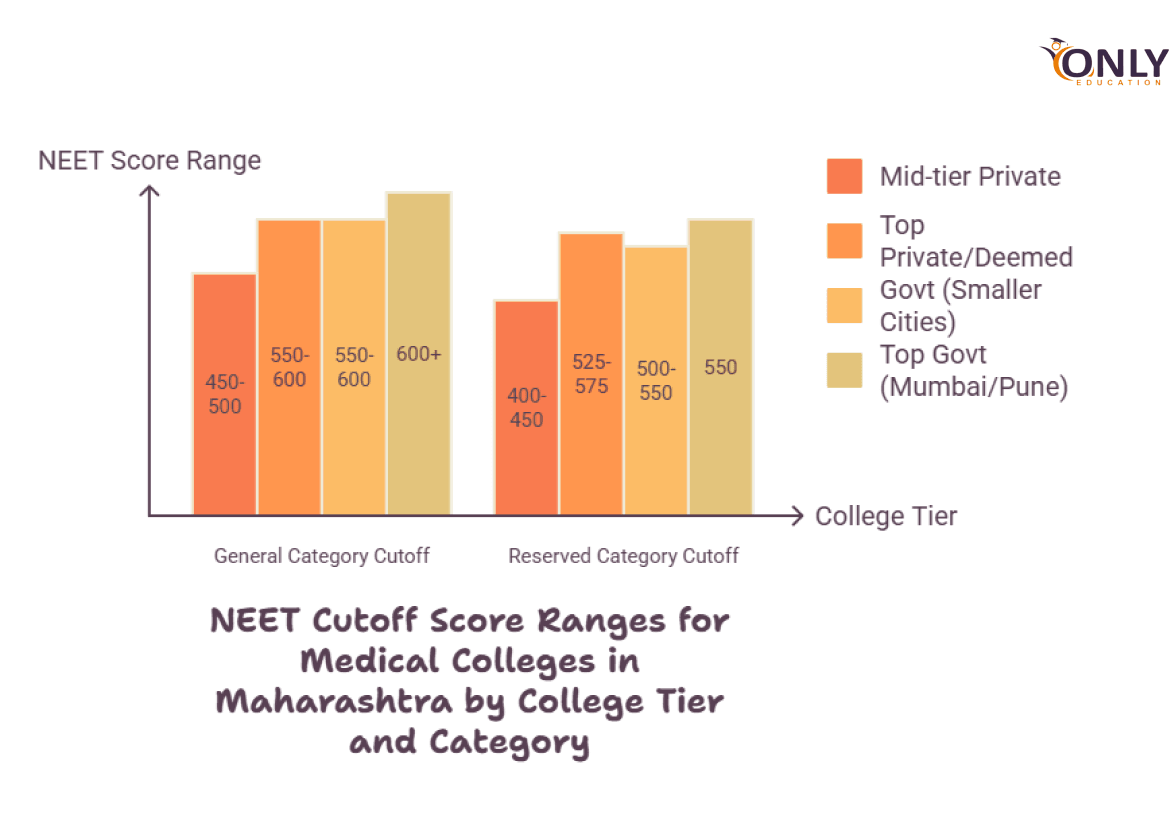
Based on recent counselling trends:
- Top government colleges (Seth GS, Grant, BJMC, Topiwala National): General category closing scores typically sit well above 600; a score around 550 is usually below the cutoff for these Mumbai flagship colleges.
- Government colleges in smaller cities (Nagpur, Aurangabad, Yavatmal, Miraj): More accessible for general-category candidates around the 550-mark, and reserved-category candidates have a wider range of options at similar scores.
- Top private/deemed universities (DY Patil, Datta Meghe): General category closing ranks in AIQ deemed counselling have recently closed around AIR 20,000–40,000 (roughly 550–600 marks); OBC closing scores run slightly lower.
- Mid-tier private colleges (Terna, Kashibai Navale): General category has closed in the 450–500 mark range in recent cycles, making them realistic options for students outside the very top score bracket.
Cutoffs shift every year based on the number of NEET applicants, paper difficulty, and seat matrix changes treat the ranges above as directional planning references, not guarantees, and always cross-check the latest official cutoff data on mcc.nic.in or the Maharashtra CET Cell portal.
Cost of Studying at Medical Colleges in Maharashtra
The total cost of an MBBS degree in Maharashtra ranges from roughly ₹2–5 lakh at a government college to well over ₹1 crore at a premium deemed university, making fee comparison one of the most important steps before finalizing your choice.
- Government colleges: ₹10,000–₹1 lakh per year → roughly ₹2–5 lakh for the full 4.5-year course.
- Private colleges (state quota): ₹7–12 lakh per year.
- Deemed universities (institutional/management quota): ₹15–27 lakh per year, sometimes touching ₹1.3+ crore in total for flagship institutions.
- NRI quota: Typically quoted separately in USD, often in the $20,000–$70,000 per year range, with comparatively relaxed NEET score requirements but strict documentation checks.
Scholarships and Fee Relief
Maharashtra offers targeted fee waivers, most notably full fee exemption for eligible EWS, SEBC, and OBC category girl students whose family income is ₹8 lakh or below per year a scheme that meaningfully widens access to colleges like Grant Medical College, BJ Government Medical College, and Seth GS Medical College.
How to Choose the Right Medical College
Choosing the right top medical college in Maharashtra comes down to matching your NEET score realistically to a college tier, then weighing fees, location, and hospital exposure against your long-term career goals.
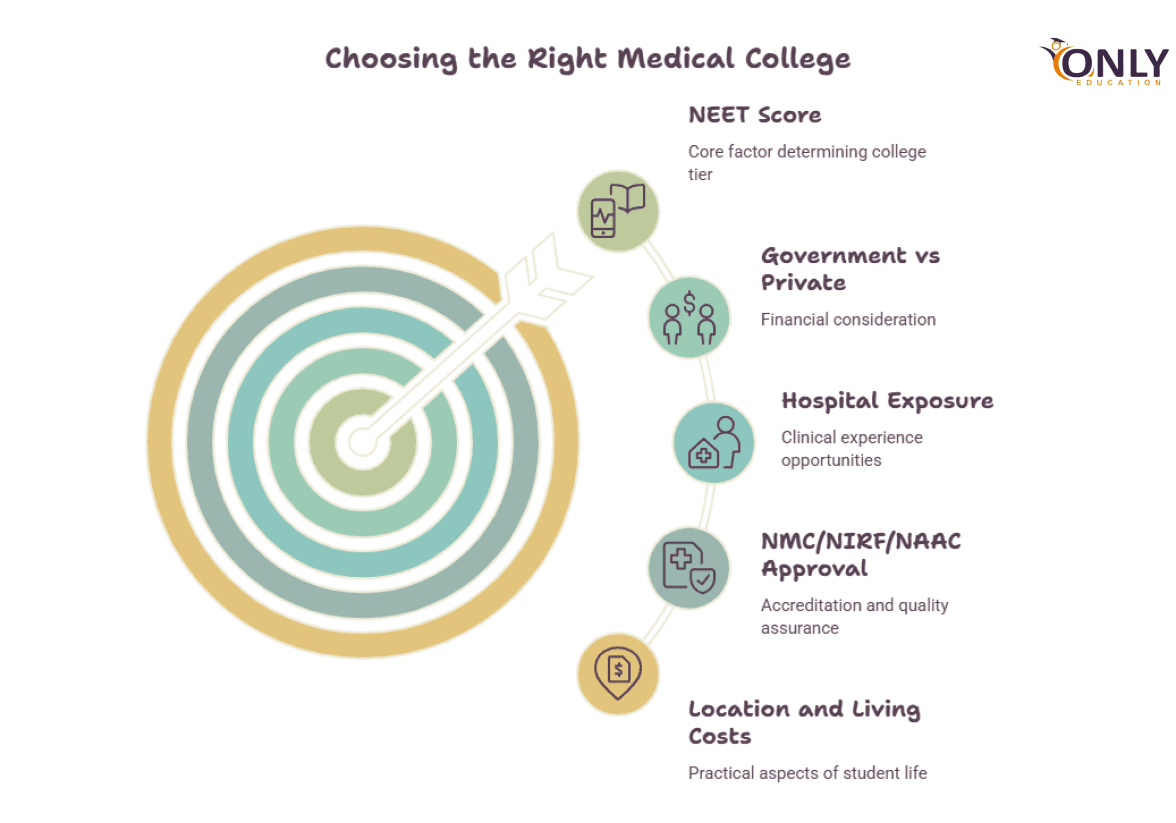
Use this checklist:
- Start with your realistic NEET rank band, not your dream college compare your score against last year's closing ranks for the same quota and category.
- Decide government vs private early if your family cannot comfortably support ₹15–27 lakh/year fees, prioritize government and mid-tier private options.
- Check the affiliated hospital's bed strength and patient load more beds generally mean more hands-on clinical exposure during clinical years.
- Verify NMC approval and NIRF/NAAC status for any private or deemed college before applying.
- Factor in location and living costs Mumbai and Pune have higher living expenses than Nagpur, Kolhapur, or Wardha.
- Look at postgraduate seat availability if you're already planning to pursue NEET PG at the same institution.
- Talk to current students or alumni where possible infrastructure photos on a website don't always reflect day-to-day hostel, mess, or clinical-posting realities.
Common Mistakes Students Make
- Chasing brand name over hospital exposure a well-known name means little if the affiliated hospital has low patient volume.
- Ignoring quota rules assuming a non-domicile student can access state quota seats, which is not permitted in Maharashtra's closed-state system.
- Underestimating total cost focusing only on the quoted annual fee while ignoring hostel, mess, uniform, and instrument costs that add up over 5.5 years.
- Filling choice lists too narrowly listing only 3–4 dream colleges instead of a realistic spread, risking a wasted admission cycle.
- Skipping verification of NMC/NIRF status for lesser-known private colleges before paying any advance fee.
Step-by-Step Guide to Applying
- Register for NEET UG and appear for the exam in the eligible academic year.
- Check your NEET score and All-India Rank once results are declared.
- Register separately for Maharashtra CET Cell (state quota) and/or MCC (AIQ/deemed) counselling, as applicable.
- Verify domicile and category documents required for state quota eligibility.
- Fill your choice list carefully, ranking colleges from most to least preferred based on realistic cutoff research.
- Participate in seat allotment rounds, and confirm/upgrade your seat through subsequent rounds if eligible.
- Complete document verification and fee payment at the allotted college within the stipulated deadline.
- Report for admission and begin the MBBS program, which runs 4.5 years plus a mandatory 1-year internship.
Future of Medical Education in Maharashtra
Maharashtra continues to expand its government medical college network, with ten new government colleges added in cities such as Ambernath, Amravati, and Bhandara in the recent expansion cycle a trend expected to continue as the state works to increase the doctor-to-population ratio in semi-urban and rural districts.
Emerging directions to watch:
- More government seats in Tier-2/3 cities, gradually easing the intense competition concentrated around Mumbai and Pune.
- Greater NIRF and NAAC scrutiny of private and deemed universities, pushing fee transparency and infrastructure upgrades.
- Digital and simulation-based learning becoming standard even at government colleges, narrowing the infrastructure gap with private institutions.
- Stronger rural posting requirements, tying government-subsidized seats more closely to service commitments in underserved areas.
Expert Insights
Career counsellors who work closely with NEET aspirants consistently flag two recurring themes: first, students often over-index on a college's reputation while under-researching its affiliated hospital's actual patient load a factor that directly determines the quality of clinical exposure during MBBS. Second, families frequently underestimate the full 4.5-year cost of private and deemed universities by focusing only on the first year's quoted fee, leading to financial strain later in the course.
A realistic, tiered choice-filling strategy rather than chasing only two or three "dream" colleges remains the single most effective way to secure a good seat within one's NEET score band.
FAQs
1. Which is the No. 1 medical college in Maharashtra?
Rankings vary by methodology, but Seth GS Medical College (Mumbai) and Grant Medical College (Mumbai) are the most preferred in state counselling, while Dr. D.Y. Patil Vidyapeeth, Pune, holds a strong NIRF ranking among private/deemed universities.
2. How many medical colleges are there in Maharashtra?
Maharashtra has 43 government medical colleges and dozens of private and deemed universities, together offering more than 11,000 MBBS seats as of 2026.
3. What is the NEET cutoff for government medical colleges in Maharashtra?
Top Mumbai and Pune government colleges typically need general-category scores well above 600, while colleges in smaller cities like Nagpur, Aurangabad, and Miraj can be accessible around the 550-mark range, depending on the year.
4. Can students from outside Maharashtra apply to medical colleges in the state?
Yes, but only through the All India Quota (15% government seats), the deemed university institutional/NRI quota, or the private college institutional quota. Maharashtra's state quota is reserved for domicile-holders only.
5. What is the fee for MBBS in a government medical college in Maharashtra?
Government college fees typically range from ₹10,000 to ₹1 lakh per year, making the full course cost roughly ₹2–5 lakh over 4.5 years.
6. What is the fee for MBBS in private medical colleges in Maharashtra?
Private and deemed university fees range widely, from about ₹7 lakh per year at mid-tier colleges to ₹22–27 lakh per year at premium deemed universities like Dr. D.Y. Patil Vidyapeeth.
7. Is MBBS free for girls in Maharashtra?
Girls from EWS, SEBC, and OBC categories with family income up to ₹8 lakh per year are eligible for full fee waivers at eligible government and aided medical colleges under a state scheme.
8. How long is the MBBS course in Maharashtra?
MBBS in Maharashtra runs 5.5 years total 4.5 years of academic study followed by a mandatory 1-year rotating internship.
9. Who conducts counselling for medical colleges in Maharashtra?
The Maharashtra CET Cell (under DMER) conducts state quota counselling for 85% of government and 100% of private-aided seats, while the Medical Counselling Committee (MCC) handles the 15% All India Quota and 100% deemed university seats.
10. What is the difference between government, private, and deemed medical colleges in Maharashtra?
Government colleges are state/centrally funded with the lowest fees; private colleges are independently run but follow DMER's state quota norms; deemed universities are autonomous institutions that set their own fees and are counselled separately through MCC.
11. Which cities in Maharashtra have the most medical colleges?
Mumbai and Pune have the highest concentration of top-ranked medical colleges, though Nagpur, Aurangabad, Kolhapur, Wardha, and Nashik also host well-regarded government and deemed institutions.
12. Are private medical colleges in Maharashtra NMC-approved?
Yes, all legitimately operating medical colleges in Maharashtra government, private, and deemed must hold current NMC approval; students should verify this status before applying to any lesser-known institution.
Conclusion
Maharashtra remains one of India's strongest states for medical education, offering everything from century-old government teaching hospitals with rock-bottom fees to modern, NIRF-ranked private universities with global exposure. The right choice ultimately depends on three honest inputs: your NEET score band, your family's fee budget, and how much weight you place on hands-on clinical exposure versus infrastructure and brand recognition.
Rather than chasing a single "best" college, build a realistic, tiered choice list covering flagship, mid-tier, and safe options across both government and private categories so you enter counselling prepared for whichever round your seat comes through.
Planning your NEET counselling strategy for Maharashtra? Start by shortlisting 8–10 colleges across government and private tiers based on your expected NEET score, then cross-check each one's latest closing rank and fee structure on the official Maharashtra CET Cell and MCC portals before choice-filling.