
Failed Re-NEET 2026? Best Career Options Now

Re-NEET 2026 was conducted on June 21, 2026, across 551 cities and 14 international centres, for approximately 22.79 lakh candidates.
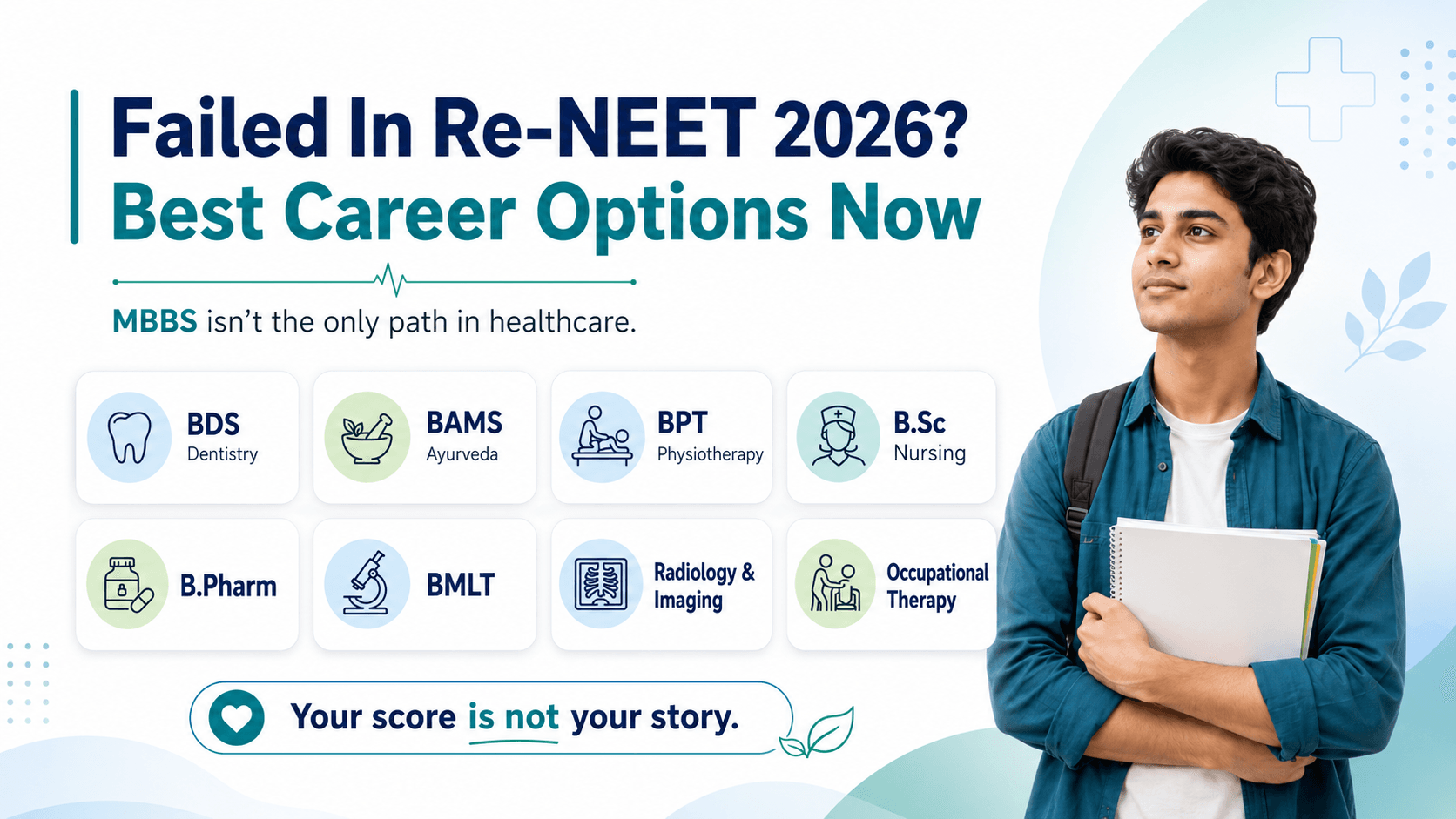
You just came out of Re-NEET 2026. The paper was tough Physics was brutal, the cutoff is likely to go higher than last year, and there are over 22 lakh students competing for just 1.29 lakh MBBS seats.
The maths alone says that the vast majority of NEET aspirants even those who passed will not get government MBBS seats.
If you're reading this, you may be one of them.
That first wave of panic is real. Years of coaching, late nights, sacrificed weekends and now uncertainty. You're not alone, and more importantly, you are not out of options.
India's healthcare system is expanding faster than any other sector. The Indian healthcare market is projected to cross $370 billion by 2026, driven by a growing population, rising chronic diseases, and an acute shortage of skilled professionals at every level. That shortage is your opportunity.
A doctor's coat has many colours and MBBS is just one of them.
This guide is built specifically for students who didn't qualify Re-NEET 2026 or scored below their target. It covers:
- What Re-NEET 2026 actually means and what to do now
- A detailed comparison of repeating NEET vs. switching paths
- 20 career options with salary, scope, and eligibility data
- High-paying non-MBBS medical careers ranked and compared
- Best courses by NEET score bracket
- MBBS abroad: honest analysis of costs, benefits, and risks
- Emerging healthcare careers for 2026 and beyond
- Real student scenarios and a clear action plan
Read it all. Then make a decision not from panic, but from information.
Failed Re-NEET 2026? Here's What It Actually Means
What Happened in NEET 2026
The original NEET UG 2026 examination, held on May 3, 2026, was cancelled following serious allegations of a coordinated paper leak. The Central Bureau of Investigation (CBI) launched a nationwide probe, and the National Testing Agency (NTA) with government approval, scheduled a fresh re-examination.
Re-NEET 2026 was conducted on June 21, 2026, across 551 cities and 14 international centres, for approximately 22.79 lakh candidates.
The Re-NEET 2026 result is expected by late July to early August 2026. NEET UG 2026 counselling by the Medical Counselling Committee (MCC) is expected to begin in August–September 2026.
The Hard Reality of Seat Math
Metric | 2026 Data |
| Total students who appeared | ~22.79 lakh |
| Total MBBS seats in India | ~129,603 (across 824 colleges) |
| Government MBBS seats | ~63,160 |
| Private MBBS seats | ~66,443 |
| Students who can realistically get govt. MBBS | ~60,000–65,000 |
| Gap (students without MBBS options) | ~21+ lakh |
That means even students who passed the qualifying cutoff around 144+ for General category will not necessarily secure MBBS admission. For government MBBS, General category students typically need 600+ marks. For private MBBS, the range drops, but fees can run ₹60–80 lakh over five years.
"Failing Re-NEET" could mean the following:
- Scoring below the qualifying cut-off (under 144 for General, under 113 for OBC/SC/ST)
- Qualifying NEET but scoring too low for MBBS counselling in your state
- Qualifying and ranking, but not getting a seat due to competition
All three scenarios leave you in the same position: needing a new plan.
aspirants,
Common Myths vs. Reality
Myth | Reality |
| "Without MBBS, I can't work in healthcare." | False. BPT, Nursing, BDS, BAMS, Pharmacy and 15+ other degrees lead to full medical careers |
| "Low NEET score means I'm not intelligent." | False. NEET tests specific subjects under time pressure, not professional potential |
| "Repeating NEET next year guarantees a seat." | False. Competition grows each year; repeat attempts have a diminishing success probability |
| "MBBS abroad is risky." | Partly true; it requires careful college selection, NMC compliance, and screening exam (NEXT) |
| "Allied health doesn't pay well." | False. Radiology, OT Technology, and Clinical Research professionals earn ₹6–12 LPA with experience |
Should You Repeat NEET or Choose Another Career Path?
This is the most important decision you'll make right now. Don't make it emotionally. Make it strategically.
Comparison Table: Repeat NEET vs. Alternative Career
Factor | Repeat NEET | Alternative Career (e.g. BPT / BDS / Nursing) |
| Time to employment | A minimum of 2 more years + a 5.5-year MBBS | 3.5 to 5 years |
| Financial cost | ₹2–5L/year coaching + MBBS fees (₹10L–80L) | ₹50K–5L/year (depending on course) |
| Opportunity cost | 2–3 gap years; psychological pressure | Begin career 2–3 years earlier |
| Risk level | High (NEET is unpredictable; seats are limited) | Low to Medium (most have merit-based admission) |
| Salary potential | ₹6L–20L+ (post-MBBS + PG) | ₹3L–12L+ (without PG); higher with specialisation |
| International scope | MBBS + PG required for abroad; very high | Nursing, Physiotherapy, Pharmacy have strong global demand |
| Job security | Very high (post-PG) | High (healthcare is recession-proof) |
| Satisfaction | High if you genuinely want to be a doctor | High if matched to personality and interest |
Who Should Consider Repeating NEET
Repeat NEET only if ALL of the following are true:
- You scored above 400 this year (genuine near-miss, not a structural subject weakness)
- You have a specific, urgent passion for clinical medicine (not just parental pressure)
- Your family can financially support one more year of focused preparation
- You have a concrete plan to address your weak subject(s)
If you are unsure, that uncertainty itself is a signal. Get proper career counselling before committing to another year of preparation.
Top 20 Career Options After Failing Re-NEET 2026
1. BDS: Bachelor of Dental Surgery
- Course Overview: A 5-year undergraduate degree (including 1-year internship) in dental medicine. BDS graduates are qualified dentists who diagnose and treat oral health conditions.
- Eligibility: 10+2 with Physics, Chemistry, Biology; NEET score required (lower cutoff than MBBS, typically 450–500+ for government dental colleges, lower for private)
- Duration: 5 years (4 years + 1-year internship)
- Average Fees: ₹2–6L/year (government); ₹5–20L/year (private)
- Career Opportunities: Dental surgeon in hospitals, private clinic owner, dental specialist (orthodontist, oral surgeon after MDS), academic, public health dentist
- Starting Salary: ₹3–6 LPA (government); ₹2–4 LPA initially in private sector
- Long-Term Salary: ₹8–25 LPA (private clinic/specialist); government pay scale ₹56,000–1.5 L/month (7th Pay Commission)
- Future Scope: India has a severe dentist shortage (1:50,000 vs the WHO's 1:7,500 recommendation). With the cosmetic dentistry boom and growing awareness, demand is rising rapidly.
- Pros: Recognized medical degree; option for private practice; relatively lower NEET cutoff than MBBS; global recognition post-MDS
- Cons: Still NEET-dependent; private clinic requires significant capital investment; some social stigma compared to MBBS in India
2. BAMS: Bachelor of Ayurvedic Medicine and Surgery
- Course Overview: A 5.5-year undergraduate degree (including a 1-year internship) in Ayurveda medicine, regulated by the National Commission for Indian System of Medicine (NCISM).
- Eligibility: 10+2 with PCB; NEET score mandatory (cutoff generally 200–350 for most AYUSH colleges)
- Duration: 5.5 years
- Average Fees: ₹20,000–3L/year (government); ₹3–10L/year (private)
- Career Opportunities: AYUSH doctor in government hospitals (PM-AYUSH scheme), private clinics, wellness centres, Panchakarma specialist, pharmaceutical R&D (herbal), academics, public health
- Starting Salary: ₹3–5 LPA (government health officer); ₹2–4 LPA (private)
- Long-Term Salary: ₹6–15 LPA; private clinic/wellness centre owners earn significantly more
- Future Scope: The AYUSH sector received a ₹3,712 crore budget allocation in 2026. The government's PM-AYUSH Wellness Centres programme is expanding BAMS doctor employment dramatically across rural India.
- Pros: NEET qualifying, not competitive; lower fees; government employment; growing global demand for Ayurveda
- Cons: Less scope for emergency/critical care; licensing to practice allopathy is restricted; lower social recognition vs MBBS
3. BHMS: Bachelor of Homeopathic Medicine and Surgery
- Course Overview: A 5.5-year degree in homoeopathic medicine, regulated by the National Commission for Homoeopathy (NCH).
- Eligibility: 10+2 with PCB; NEET mandatory (cutoff ~150–300 in most states)
- Duration: 5.5 years
- Average Fees: ₹15,000–2L/year (government); ₹2–8L/year (private)
- Career Opportunities: Homeopathic physician in government/private hospitals, own clinic, teaching, research, pharmaceutical industry (homeopathic product companies)
- Starting Salary: ₹2.5–4 LPA
- Long-Term Salary: ₹5–12 LPA
- Future Scope: India is the world's largest market for homeopathy. The sector is expanding with increasing patient demand for alternative medicine.
- Pros: Lower NEET cutoff; affordable education; option for private practice; growing patient base
- Cons: Controversy around scientific validity limits career in research; restricted in many international markets.
4. BUMS: Bachelor of Unani Medicine and Surgery
- Course Overview: A 5.5-year degree in Unani medicine, one of the oldest medical systems recognised by the Indian government.
- Eligibility: 10+2 with PCB; NEET required (cut-off typically ~150–250)
- Duration: 5.5 years
- Average Fees: ₹10,000–2L/year (government); ₹2–6L/year (private)
- Career Opportunities: Unani physician, government AYUSH health officer, herbal medicine R&D, traditional medicine clinics
- Starting Salary: ₹2.5–4 LPA
- Long-Term Salary: ₹5–10 LPA
- Future Scope: Primarily strong in states with large Muslim populations and in export markets for herbal/Unani products.
- Pros: Low NEET cutoff; affordable; government job opportunities under AYUSH scheme
- Cons: Limited geographic demand; fewer private practice opportunities compared to BAMS/BHMS
5. BSMS: Bachelor of Siddha Medicine and Surgery
- Course Overview: A 5.5-year degree in Siddha medicine, an ancient South Indian medical tradition.
- Eligibility: 10+2 with PCB; NEET required (primarily Tamil Nadu, Kerala, Karnataka)
- Duration: 5.5 years
- Average Fees: ₹10,000–1.5L/year
- Career Opportunities: Siddha physician, government AYUSH postings, research in herbal/traditional medicine, Panchakarma therapy
- Starting Salary: ₹2.5–3.5 LPA
- Long-Term Salary: ₹4–10 LPA
- Future Scope: Primarily concentrated in South India; growing interest in traditional medicine globally creates niche export and research opportunities.
- Pros: Unique niche; low competition; government employment available
- Cons: Very region-specific career scope; limited recognition outside South India
6. BPT: Bachelor of Physiotherapy
- Course Overview: A 4.5-year undergraduate degree (including 6-month internship) focusing on rehabilitation, movement science, and physical therapy.
- Eligibility: 10+2 with PCB; NEET score required for most top colleges (particularly government institutions); some private universities admit on merit
- Duration: 4.5 years
- Average Fees: ₹40,000–3L/year (government); ₹1–5L/year (private)
- Career Opportunities: Hospital physiotherapist, sports physiotherapist (cricket teams, IPL, Olympic teams), neurological rehabilitation, paediatric physiotherapy, private clinic owner, corporate wellness, international practice
- Starting Salary: ₹3–5 LPA (hospital); ₹4–7 LPA (sports/private)
- Long-Term Salary: ₹8–20 LPA; private practice owners earn ₹15–40 LPA
- Future Scope: Exceptional. The global physiotherapy market is growing at 6.5% CAGR. India's aging population, sports boom, and post-COVID rehabilitation needs are driving rapid demand. Physiotherapists with MPT earn significantly more and find strong placement globally.
- Pros: Can establish private practice; strong international career paths (UK, Canada, Australia, USA); high job satisfaction; growing sports segment
- Cons: Entry-level salary is modest; requires empathy and physical stamina; regulatory requirements differ by country for abroad practice
7. B.Sc. Nursing
- Course Overview: A 4-year undergraduate degree preparing students for professional nursing practice.
- Eligibility: 10+2 with PCB; minimum 45% marks (40% for SC/ST); age 17–35 years; some top colleges (AIIMS, PGIMER) require NEET scores
- Duration: 4 years
- Average Fees: ₹20,000–2L/year (government); ₹1–4L/year (private)
- Career Opportunities: Staff nurse in hospitals (government and private), ICU/CCU nurse, community health nurse, nurse educator, nurse researcher, OPD nurse, travelling nurse (international)
- Starting Salary: ₹3–5 LPA (India); ₹20–40 LPA equivalent (abroad USA, UK, Canada, Australia, Middle East)
- Long-Term Salary: ₹6–12 LPA (India, senior positions); ₹30–80 LPA equivalent (abroad, with specialisation)
- Future Scope: Outstanding. India faces a critical nursing shortage the WHO estimates India needs 2.4 million additional nurses to meet standards. The global demand for Indian nurses is even stronger, with NCLEX (USA), NMC OET (UK), and HAAD (UAE) pathways providing clear routes abroad.
- Pros: Excellent global migration pathway; stable employment in India; AIIMS nursing is among the best government jobs; growing specialisation options
- Cons: Physically demanding; shift work; public sector pay in India is not proportionate to responsibilities; abroad requires additional licensing exams
8. B.Pharm. Bachelor of Pharmacy
- Course Overview: A 4-year professional degree covering drug science, pharmacology, pharmaceutical chemistry, and clinical pharmacy.
- Eligibility: 10+2 with PCB or PCM; entrance exams like GPAT, university-level tests, or merit-based; NEET generally not required
- Duration: 4 years
- Average Fees: ₹30,000–3L/year (government); ₹1–5L/year (private)
- Career Opportunities: Pharmacist (hospital, retail, clinical), pharmaceutical industry (manufacturing, regulatory affairs, drug safety), medical representative, R&D in drug companies, drug inspector, patent analyst
- Starting Salary: ₹2.5–5 LPA
- Long-Term Salary: ₹6–18 LPA (R&D, regulatory affairs, clinical pharmacy in MNCs)
- Future Scope: India's pharmaceutical industry is the third largest in the world by volume and is growing at ~11% annually. Regulatory affairs, pharmacovigilance, and clinical pharmacy are especially high-demand specialisations.
- Pros: NEET generally not required; strong industry demand; good scope in pharma MNCs; international pathways (USA PharmD, UK, Australia)
- Cons: Hospital pharmacist salaries in India can be low; retail pharmacy is competitive; MNC jobs require strong analytical skills
9. B.Sc. Occupational Therapy (BOTh)
- Course Overview: A 4.5-year degree focused on helping patients regain daily living and work-related skills after illness, injury, or disability.
- Eligibility: 10+2 with PCB; university/state-level entrance or merit-based
- Duration: 4.5 years (including 6-month internship)
- Average Fees: ₹50,000–3L/year
- Career Opportunities: OT therapist in rehabilitation centres, mental health hospitals, paediatric settings, corporate ergonomics, schools for differently-abled children, geriatric care
- Starting Salary: ₹3–5 LPA
- Long-Term Salary: ₹6–12 LPA; private practice potential ₹15–25 LPA
- Future Scope: With India's ageing population and rising neurological conditions (stroke, Parkinson's), OT demand is accelerating. Global pathways to UK, USA, Canada, and Australia are strong.
- Pros: Growing niche; low competition; international demand; strong emotional rewards
- Cons: Less awareness in India leads to fewer job openings in Tier 2/3 cities; requires empathy and communication skills
10. BMLT B.Sc. Medical Laboratory Technology
- Course Overview: A 3-year undergraduate degree training students to perform laboratory tests for diagnosis and treatment monitoring.
- Eligibility: 10+2 with PCB; most colleges admit on merit or state entrance exams; NEET typically not required
- Duration: 3 years
- Average Fees: ₹30,000–2L/year
- Career Opportunities: Medical laboratory technician in hospitals (AIIMS, PGIMER, private hospitals), diagnostic chain (Dr Lal PathLabs, SRL, Thyrocare), blood bank technician, research lab technician
- Starting Salary: ₹2.5–4 LPA
- Long-Term Salary: ₹5–10 LPA (supervisor roles, diagnostic chain management)
- Future Scope: The Indian diagnostics industry is expected to reach ₹1.3 lakh crore by 2030. Diagnostic chains are expanding aggressively into Tier 2 and 3 cities, creating thousands of MLT positions.
- Pros: NEET not required; 3-year course; early employment; AIIMS salary range ₹35,000–60,000/month for government roles
- Cons: Entry-level salaries are modest; physically demanding (standing work, exposure to specimens); limited growth without MSc or PGDMLT
11. B.Sc. Radiology & Imaging Technology
- Course Overview: A 3-4 year degree covering X-ray, ultrasound, CT, MRI, and nuclear imaging techniques.
- Eligibility: 10+2 with PCB; merit-based or state/university entrance; NEET generally not required
- Duration: 3–4 years
- Average Fees: ₹50,000–3.5L/year
- Career Opportunities: Radiology technician in hospitals and imaging centres, CT/MRI operator, sonography technician, radiation therapist
- Starting Salary: ₹3–5 LPA
- Long-Term Salary: ₹8–12 LPA (with CT/MRI specialisation); ₹15–20 LPA in corporate hospitals
- Future Scope: One of the highest-paying paramedical careers in 2026. Advanced imaging (AI-assisted radiology and interventional radiology) is creating premium roles. Global demand is strong; the USA, UK, UAE, and Canada all actively recruit radiology technologists.
- Pros: High salary trajectory; NEET not required; technology-driven; strong global demand
- Cons: Radiation exposure requires safety protocols; requires continuous upskilling as technology evolves
12. Operation Theatre Technology (OTT)
- Course Overview: A 3-year degree training students to assist surgeons in the OT managing instruments, sterilisation, anaesthesia support, and surgical prep.
- Eligibility: 10+2 with PCB; state or university entrance or merit-based
- Duration: 3 years
- Average Fees: ₹30,000–2.5L/year
- Career Opportunities: OT technician in government hospitals, corporate super-specialty hospitals (Apollo, Fortis, Manipal), medical device industry trainer
- Starting Salary: ₹3–5 LPA
- Long-Term Salary: ₹7–12 LPA (senior OT technician, OT supervisor in corporate hospitals)
- Future Scope: Surgical procedures in India are growing 12–15% annually. Robotic surgery expansion is creating demand for OT technologists with specialised skills.
- Pros: High daily relevance; strong job placement in metro hospitals; NEET not required; growing specialisation in robotic OT assistance
- Cons: High-pressure environment; irregular hours; limited awareness in smaller cities
13. B.Sc. Nutrition and Dietetics
- Course Overview: A 3-year undergraduate degree in food science, clinical nutrition, and dietetics.
- Eligibility: 10+2 with PCB or PCM; merit-based or entrance exam; NEET not required
- Duration: 3 years
- Average Fees: ₹20,000–2L/year
- Career Opportunities: Dietitian in hospitals, clinical nutritionist, sports nutritionist (BCCI, sports academies), corporate wellness nutritionist, food blogger/influencer (with scientific credibility), nutrigenomics researcher
- Starting Salary: ₹2.5–4 LPA
- Long-Term Salary: ₹6–14 LPA (clinical dietitian, senior nutritionist); considerably more in sports nutrition and private practice
- Future Scope: Rapid growth driven by India's diabetes and obesity epidemic. The clinical nutrition market is expected to grow at 9% CAGR. Sports nutrition for IPL, Pro Kabaddi, and Indian Olympic athletes is an emerging premium niche.
- Pros: Growing demand; multiple work environments; entrepreneurship potential; NEET not required
- Cons: Lower starting salaries; private practice requires building a client base; regulatory framework less defined than for doctors
14. B.Sc. Biotechnology
- Course Overview: A 3-year science degree at the intersection of biology and technology covering genetics, cell biology, molecular biology, and bioinformatics.
- Eligibility: 10+2 with PCB or PCM; JEE/university entrance or merit-based; NEET not required
- Duration: 3 years (BSc); 5 years (B.Tech. Biotechnology)
- Average Fees: ₹20,000–3L/year
- Career Opportunities: Research associate in pharma/biotech companies, clinical research coordinator, bioinformatics analyst, quality control in biotech industry, higher studies (MSc, PhD, MBA)
- Starting Salary: ₹2.5–4.5 LPA (industry); higher post-MSc/PhD
- Long-Term Salary: ₹8–20 LPA (R&D specialist, regulatory affairs manager, PhD researcher)
- Future Scope: India's biotechnology sector is growing at 14% CAGR. CRISPR, mRNA vaccines, biosimilars, and genomic medicine are creating premium research roles. MSc + PhD pathways lead to international postdoctoral positions.
- Pros: NEET not required; global research pathways; high intellectual engagement; strong scope post-MSc/PhD
- Cons: Entry-level industry salaries are modest; best returns require MSc/PhD; research roles require patience and long-term commitment
15. B.A./B.Sc. Psychology
- Course Overview: A 3-year undergraduate degree in human behaviour, mental health, and psychological science.
- Eligibility: 10+2 (any stream for B.A.; PCB/PCM for B.Sc. Psychology); merit or university entrance
- Duration: 3 years
- Average Fees: ₹15,000–2L/year
- Career Opportunities: Counsellor (schools, corporates, NGOs), psychologist (with M.Sc. + RCI registration), clinical psychologist (with M.Phil.), HR professional, UX researcher, academic, mental health content creator
- Starting Salary: ₹2.5–4 LPA
- Long-Term Salary: ₹6–15 LPA (licensed clinical psychologist, corporate psychologist)
- Future Scope: Mental health is India's fastest-growing healthcare segment. Post-COVID, awareness and demand for psychological services have surged. The Rehabilitation Council of India (RCI) regulates clinical psychology licensure, which is required for clinical practice.
- Pros: Growing demand; entrepreneurship (private practice); diverse industries; NEET not required
- Cons: Requires an M.Phil./M.Sc. for clinical practice; India's regulatory system for psychology is still maturing; emotional burnout risk
16. Bachelor of Public Health (BPH)
- Course Overview: A 3–4-year degree in population-level health systems, epidemiology, health policy, and community health.
- Eligibility: 10+2 with PCB; merit or entrance exam; NEET generally not required
- Duration: 3–4 years
- Average Fees: ₹40,000–3L/year
- Career Opportunities: Public health officer, health programme coordinator (WHO, UNICEF, UNDP, NGOs), epidemiologist, health policy analyst, community health manager
- Starting Salary: ₹3–5 LPA
- Long-Term Salary: ₹8–20 LPA (senior program officer at international agencies); NGO and WHO roles can go up to ₹30–50 LPA
- Future Scope: High. With the COVID-19 pandemic exposing public health infrastructure gaps, government and international bodies are investing heavily in public health capacity. USAID, WHO, UNDP, and Gavi all actively hire public health graduates.
- Pros: International career pathway; meaningful work; NEET not required; high growth post-MPH
- Cons: Entry-level positions in India often pay modestly; best opportunities require MPH/PhD; government positions are competitive
17. BHA Bachelor of Hospital Administration / Healthcare Management
- Course Overview: A 3–4-year management degree focused on running healthcare facilities, hospital operations, health finance, and medical administration.
- Eligibility: 10+2 (any stream); merit or entrance exam; NEET not required
- Duration: 3–4 years (UG); 2 years MBA (post-graduation option)
- Average Fees: ₹30,000–3L/year
- Career Opportunities: Hospital administrator, operations manager (Apollo, Fortis, Manipal hospitals), health insurance analyst (Star Health, ICICI Lombard), medical tourism coordinator, pharmaceutical project manager
- Starting Salary: ₹3.5–5 LPA
- Long-Term Salary: ₹10–25 LPA (senior hospital administrator, COO in private hospitals)
- Future Scope: As India's corporate hospital chains expand (Apollo, Manipal, Aster adding hundreds of beds annually), healthcare management professionals are in acute demand. An MBA in Healthcare Management from top B-schools adds premium value.
- Pros: NEET not required; corporate growth environment; leadership career track; high earning potential post-MBA
- Cons: Less "clinical", suited to those interested in systems over patient care; requires business orientation
18. B.Sc / PGD Clinical Research
- Course Overview: Training in the design, management, and monitoring of clinical trials the backbone of new drug approvals.
- Eligibility: 10+2 with PCB (for BSc); any life sciences graduate (for PGD Clinical Research); NEET not required
- Duration: 3 years (BSc); 1–2 years (PGD/MSc)
- Average Fees: ₹1–4L/year (private institutes)
- Career Opportunities: Clinical Research Associate (CRA), Clinical Research Coordinator (CRC), Regulatory Affairs Associate, Data Manager, Pharmacovigilance Associate at pharma companies (AstraZeneca, Novartis, Sun Pharma) and CROs
- Starting Salary: ₹3–5 LPA
- Long-Term Salary: ₹10–25 LPA (senior CRA, regulatory director in MNCs); global roles go higher
- Future Scope: India is one of the world's top clinical trial destinations. With global pharma companies conducting trials in India, demand for trained CRAs and regulatory professionals is growing at 15–20% annually.
- Pros: High earning potential; global career; NEET not required; works with cutting-edge research; pharma MNC exposure
- Cons: Requires strong scientific and documentation skills; niche field with steep learning curve; entry without strong institute brand may be difficult
19. B.Sc Forensic Science
- Course Overview: A 3-year science degree applying physical, chemical, and biological sciences to criminal investigation and legal processes.
- Eligibility: 10+2 with PCB; merit or university entrance; NEET not required
- Duration: 3 years
- Average Fees: ₹20,000–2.5L/year
- Career Opportunities: Forensic scientist (CBI, FSL, state laboratories), crime scene investigator, toxicology analyst, forensic document examiner, teaching, private forensic consulting, immigration forensics
- Starting Salary: ₹2.5–4 LPA (government entry level)
- Long-Term Salary: ₹6–14 LPA (senior forensic scientist, specialist consultant)
- Future Scope: Growing with the expansion of India's legal and law enforcement systems. DNA forensics, digital forensics, and toxicology are premium sub-specialities. International scope exists in crime labs in UK, USA, and Middle East.
- Pros: NEET not required; unique and interesting work; government employment; growing digital forensics niche
- Cons: Government jobs are competitive; limited private sector opportunities in India (currently); emotionally demanding
20. MBBS Abroad
- See Section 6 for a detailed analysis. For the overview:
- Eligibility: NEET qualified (score 150+ recommended); Class 12 with PCB (50%+); age 17+
- Duration: 5–6 years (country-specific)
- Average Total Cost: ₹25–50 lakh (Russia, Kazakhstan, Philippines, Georgia, Bangladesh) vs. ₹60–1 crore (private MBBS India)
- Starting Salary (post-return): ₹6–12 LPA (India); higher if clearing USMLE (USA) or PLAB (UK)
- Future Scope: Valid path with NMC compliance, NEXT exam, and proper college selection.
High-Paying Medical Careers That Do Not Require MBBS
Rankings based on 2026 salary data and growth trends.
Rank | Qualification | Starting Salary | Experienced Salary | Growth Rate | Demand Level |
1 | BPT + MPT (Physiotherapy) | ₹3–5 LPA | ₹12–25 LPA | Very High | Very High |
2 | B.Sc Radiology + Experience | ₹3–5 LPA | ₹10–18 LPA | Very High | High |
3 | B.Pharm + Industry | ₹3–5 LPA | ₹10–20 LPA | High | High |
4 | BDS + MDS | ₹3–6 LPA | ₹12–30 LPA (clinic) | High | High |
5 | B.Sc Nursing (Abroad) | ₹20–40 LPA (abroad) | ₹40–80 LPA (abroad) | Very High | Critical |
6 | Clinical Research (MNC) | ₹4–6 LPA | ₹12–28 LPA | Very High | Growing |
7 | BAMS + Wellness Business | ₹3–5 LPA | ₹10–30 LPA (business) | High | High |
8 | OTT (Corporate Hospital) | ₹3–5 LPA | ₹8–14 LPA | High | High |
9 | BMLT (Diagnostic Chain) | ₹2.5–4 LPA | ₹6–10 LPA | Moderate | High |
10 | Healthcare Management (MBA) | ₹5–8 LPA | ₹15–30 LPA | High | Very High |
Key insight: The fastest wealth-building paths after NEET failure are BPT + private practice, B.Sc. nursing with international migration, B.Pharm. + pharma MNC industry, and clinical research with global placement.
Best Courses Based on Your NEET Score
Below 200 Marks
You likely did not cross the qualifying cutoff (144 for General, 113 for OBC/SC/ST). The options are:
Best choices:
- B.Sc. Nursing (most colleges admit on merit; AIIMS Nursing requires NEET, but cutoff varies)
- B.Pharm / D.Pharm
- BMLT, Radiology Technology, OTT (NEET not required at most colleges)
- Diploma in Nursing (GNM)
- B.Sc. Biotechnology, Forensic Science, Psychology
- MBBS Abroad (some countries accept students with a qualifying NEET score, even low)
Strategy: Focus on allied health courses where NEET is not required. Start immediately to avoid a second gap year.
200–350 Marks
You qualified NEET but are below the MBBS competitive zone. You have access to:
Best choices:
- BAMS, BHMS, BUMS, BSMS (AYUSH courses; these are available with a NEET score in this range)
- BDS in private dental colleges (varies by state)
- BPT in some private colleges
- B.Sc. Nursing, B.Pharm
- MBBS Abroad (strong option; this score is sufficient for NMC-compliant universities in Russia, Kazakhstan, the Philippines, and Bangladesh)
Strategy: Explore AYUSH counselling (conducted separately by state AYUSH authorities). Simultaneously apply to BPT and BSc Nursing. Evaluate MBBS abroad seriously.
350–500 Marks
A competitive score with multiple strong options.
Best choices:
- BDS in some government dental colleges (state-dependent; private BDS is comfortable)
- BAMS / BHMS in better colleges
- BPT in top colleges
- MBBS Abroad in good-quality universities (Ukraine is recovering; Philippines, Georgia, and Bangladesh are strong options)
- B.Pharm, B.Sc. Nursing at top colleges
Strategy: Get NEET counselling for BDS and AYUSH immediately. Explore MBBS abroad in parallel. Don't wait seats in allied health courses also fill fast.
500+ Marks (Did Not Qualify for Preferred MBBS)
You're competitive but may have missed your target due to state cutoffs, category, or competition.
Best choices:
- BDS in government colleges (very feasible)
- MBBS in private colleges (if budget allows ₹60–80L total)
- MBBS abroad (premium NMC-compliant institutions)
- BAMS in top AYUSH institutions
- BPT at top colleges (AIIMS BPT accepts NEET scores above 500+)
Strategy: Get expert counselling on BDS counselling rounds. Explore management quota MBBS in private colleges. Evaluate MBBS abroad universities in the Philippines (Cebu Doctor's, AUP) and Georgia (Tbilisi State Medical University) that offer comparable quality to mid-range Indian private colleges at 40–50% of the cost.
MBBS Abroad: A Smart Alternative?
The Core Question
Should you pursue MBBS abroad after failing to secure an MBBS seat in India? The honest answer: it depends on your college choice, country, preparation for the NEXT exam, and financial capacity.
Who Can Go
- NEET-qualified students (any score; NMC typically requires NEET qualification but does not prescribe a minimum score for MBBS abroad)
- Class 12 with PCB 50%+ (General); 45%+ (SC/ST/OBC)
- Age 17+ at the time of admission
Top Countries and Their Profiles
Country | Duration | Total Cost (INR) | NMC Status | Quality Notes |
| Russia | 6 years | ₹25–40L | Compliant (most colleges) | Established large Indian student community; clinical exposure mixed |
| Kazakhstan | 5 years | ₹20–35L | Compliant | Growing reputation; low cost of living |
| Philippines | 5.5 years | ₹35–55L | Compliant | English medium; US-style curriculum; strong USMLE preparation |
| Georgia | 6 years | ₹30–45L | Compliant | European standard; small class sizes |
| Bangladesh | 5 years | ₹35–50L | Compliant | Culturally familiar; English medium |
| Ukraine | 6 years | ₹20–35L | Compliant | Disrupted by ongoing conflict currently risky |
| China | 6 years | ₹25–40L | Many delisted post-COVID | High caution verify NMC listing before applying |
NMC Regulations (Critical)
The National Medical Commission mandates that foreign MBBS graduates must clear the National Exit Test (NEXT Exam) before practising in India. NEXT has replaced the FMGE (Foreign Medical Graduate Examination). The NEXT pass rate for foreign graduates is an important factor; verify this before selecting a country or college.
Ensure the university is on the NMC-approved list at the time of admission, not just at the time you're choosing. Lists change.
Benefits
- Total cost often 30–60% lower than Indian private MBBS
- English-medium education (Philippines, Georgia, Bangladesh)
- Exposure to diverse patient populations
- Strong USMLE/PLAB pathway for those who want to practice abroad
- Does not require a high NEET score (beyond minimum qualification)
Risks
- Must pass NEXT to practice in India
- Variable clinical training quality depends heavily on college
- Unrecognised colleges are a serious, financially devastating risk
- Return adjustment can be challenging
Bottom Line: MBBS abroad is a legitimate option when you choose an NMC-compliant, established university. It is not a "last resort" it is a strategic choice. But it demands careful due diligence. Expert MBBS abroad counselling is essential before paying any fees.
Emerging Healthcare Careers in 2026
The healthcare industry is undergoing a technology-driven transformation. These careers are new enough that competition is limited and skilled professionals command premium salaries.
1. Medical AI Specialist
- What they do: Design, validate, and implement AI tools for medical imaging, diagnostics, and clinical decision support.
- Entry pathway: MBBS + Data Science / B.Sc. Computer Science + Medical domain knowledge / Biomedical Engineering
- Salary: ₹8–30 LPA (India); significantly higher internationally
- Why it's growing: AI diagnostics (pathology and radiology) is projected to be a $45 billion global market by 2030. Companies like Qure.ai, Niramai, and PathAI are actively hiring.
2. Health Informatics / Health Data Analyst
- What they do: Manage, analyse, and interpret healthcare data EMRs, hospital databases, population health data.
- Entry pathway: B.Sc / BCA + certifications (HL7, FHIR, SQL, Python for health data); MPH + Data Science
- Salary: ₹5–18 LPA
- Why it's growing: National Health Authority's Ayushman Bharat Digital Mission (ABDM) is creating thousands of digital health roles.
3. Genomics and Precision Medicine
- What they do: Analyse genetic data to guide personalised treatment plans. Work in genetic counselling, oncology, and rare disease diagnosis.
- Entry pathway: M.Sc. Genetics / M.Sc. Biotechnology / MBBS + genetics fellowship
- Salary: ₹6–20 LPA (India); significant global research salary
- Why it's growing: CRISPR therapy, liquid biopsy, and pharmacogenomics are moving from research to clinical use in India.
4. Healthcare Analytics Manager
- What they do: Mine hospital data to improve outcomes, reduce costs, and optimise operations.
- Entry pathway: BHA/MBA Healthcare + data analytics skills
- Salary: ₹8–22 LPA
- Why it's growing: Large hospital chains are investing heavily in analytics to compete in the healthcare market.
5. Telemedicine Coordinator / Digital Health Specialist
- What they do: Manage virtual care platforms, patient engagement apps, and remote monitoring systems.
- Entry pathway: Any healthcare background + digital health certifications
- Salary: ₹4–12 LPA (growing rapidly)
- Why it's growing: India's telemedicine market is expected to reach $5.4 billion by 2025. Government-mandated telemedicine practice guidelines are creating formal roles.
6. Pharmacovigilance / Drug Safety Associate
- What they do: Monitor drug adverse reactions and ensure drug safety compliance for pharma companies and regulators.
- Entry pathway: B.Pharm / M.Pharm / MBBS + pharmacovigilance certification
- Salary: ₹4–16 LPA (MNC pharma companies like Pfizer, Novartis, GSK, Sun Pharma)
- Why it's growing: Every drug approved globally requires ongoing safety monitoring. Regulatory requirements are tightening, creating consistent demand.
Frequently Asked Questions
Q1. What should I do immediately after failing Re-NEET 2026?
Don't make decisions from panic. First, calculate your exact score using coaching institute answer keys. Then assess: did you fail to qualify (below the cut-off), or did you qualify but likely not get an MBBS seat? The answer determines your options. Seek career counselling within the next 2–3 weeks, as allied health and AYUSH admissions start soon.
Q2. Can I appear for NEET again if I fail Re-NEET 2026?
Yes. There is no upper age limit for NEET (the Supreme Court struck down the upper age limit in 2022). You can attempt NEET as many times as you wish. However, consider the opportunity cost carefully before committing to another attempt.
Q3. Which medical course can I get with a NEET score under 200?
BAMS, BHMS, BUMS, and BSMS are available for qualifying scores, often with lower cutoffs. B.Sc. Nursing, B.Pharm., and most paramedical courses (MLT, Radiology, and OTT) do not require NEET at all. MBBS abroad is also an option; many NMC-compliant universities abroad accept students who have simply qualified for NEET (not a competitive score).
Q4. Is MBBS abroad worth it in 2026?
Yes, if you choose the right country and college. The Philippines, Georgia, and Bangladesh offer English-medium education in NMC-compliant universities at a significantly lower cost than private Indian MBBS. The critical requirement is passing the NEXT exam to practise in India. Avoid universities not listed on the NMC-approved list.
Q5. Which alternative medical course pays the highest salary?
Short-term: B.Sc. Nursing with international migration (USA, UK, Canada, ₹30–80 LPA equivalent) is the fastest high-earning pathway. Domestically, a BPT with private practice, BDS with specialisation (MDS), and clinical research at pharma MNCs offer the highest long-term earnings without an MBBS.
Q6. Is BSc Nursing better than repeating NEET?
It depends on your goals. A B.Sc. in nursing leads to employment in 4 years, international migration pathways, and a stable income. Repeating NEET leads to an MBBS in 7+ years from now (1 year of prep + 5.5 years of MBBS), with no guarantee of a seat. If your passion for being a physician is genuine and your score gap was small (you scored 500+ and missed by counselling luck), one more year may be justified. Otherwise, a BSc in Nursing offers a more certain and rewarding path.
Q7. Do all alternative medical courses require NEET?
No. NEET is currently required for MBBS, BDS, BAMS, BHMS, BUMS, BSMS, and BSc Nursing admission to AIIMS/PGIMER-level institutions. Most other paramedical courses BPT at private colleges, BMLT, Radiology Technology, OTT, B.Pharm, Forensic Science, and Biotechnology do NOT require NEET and admit on Class 12 merit or university/state entrance exams.
Q8. What is the NEET 2026 qualifying cutoff for the general category?
The expected qualifying cutoff for the General/EWS category in NEET 2026 is approximately 137–144 marks out of 720 (50th percentile). However, to secure a government MBBS seat, general category students typically need 600+ marks. These are two very different bars.
Q9. Can I get admission to BAMS with NEET?
Yes. BAMS admission through AYUSH counselling typically requires lower NEET scores than MBBS, generally in the 200–350 range for most states and colleges. The counselling is conducted separately by state AYUSH authorities. Apply to both MCC and state AYUSH counselling simultaneously.
Q10. What is the future scope of BPT (physiotherapy) in India?
Excellent. India's ageing population, rising sports activity (IPL, Olympics), and post-COVID rehabilitation needs are driving physiotherapy demand. The global physiotherapy market is growing at a 6.5% CAGR. BPT graduates with an MPT (Master's in Physiotherapy) command salaries of ₹10–20 LPA and have strong migration pathways to the UK, Canada, and Australia.
Q11. Is D.Pharm better than B.Pharm for career options?
B.Pharm is the better long-term investment. D.Pharm (2 years) leads mainly to retail pharmacy and limited hospital roles. B.Pharm (4 years) opens doors to pharma MNCs, regulatory affairs, clinical pharmacy, R&D, and better salary. If time and finances allow, always choose B.Pharm.
Q12. Can I study abroad after failing NEET entirely (not qualifying)?
Some countries and universities abroad do not strictly require a qualifying NEET score they have their own entrance criteria. However, NMC (India) requires students to have at minimum appeared for NEET to register a foreign MBBS degree in India. Not qualifying (scoring below the cutoff) is different from not appearing. Check the latest NMC regulations before proceeding.
Q13. Which country for MBBS abroad is the safest option in 2026?
Philippines and Georgia are currently considered the most stable options English-medium education, established Indian student communities, NMC compliance, and good clinical exposure. Russia remains popular but language and clinical training quality can vary significantly by institution. Avoid any university not on the NMC-approved list.
Q14. Is B.Sc Nursing available without NEET?
Yes, at most private nursing colleges. Some top-tier institutions (AIIMS Nursing, CMC Vellore, PGIMER) do require NEET scores for B.Sc Nursing. The majority of private colleges and state nursing institutions admit on Class 12 merit (PCB, 45%+) without requiring NEET.
Q15. What is the career scope of clinical research in India?
Very strong and growing. India is one of the world's top 3 clinical trial destinations. Global pharma companies (Pfizer, Novartis, Roche, Sun Pharma) and CROs (Covance, IQVIA, Parexel) actively hire Clinical Research Associates, Pharmacovigilance Associates, and Regulatory Affairs professionals in India. Starting salaries are ₹4–6 LPA, rising to ₹15–25 LPA with 5 years' experience in MNCs.
Conclusion: Your Path Forward Starts Today
Failing or underscoring in Re-NEET 2026 is a setback but not a sentence. It is a fork in the road, not the end of the road.
Every year, thousands of students who did not get an MBBS seat go on to build extraordinary careers in dentistry, physiotherapy, nursing, pharmacy, clinical research, and emerging health sciences. Their careers are meaningful, well-paid, and deeply impactful.
The students who get stuck are not those who "failed NEET". They are those who waited too long to make a decision or made one without proper information.
You now have the information.
The best career is not always the one with the most glamour it's the one that matches your strengths, your financial situation, your family's support, and your genuine interest.
Choose with clarity. Act with speed. Healthcare needs you.