
Students at Pondicherry Institute of Medical Sciences resume protest, demand full implementation of ICC report
Published 13 Nov 20255 min read440 Views
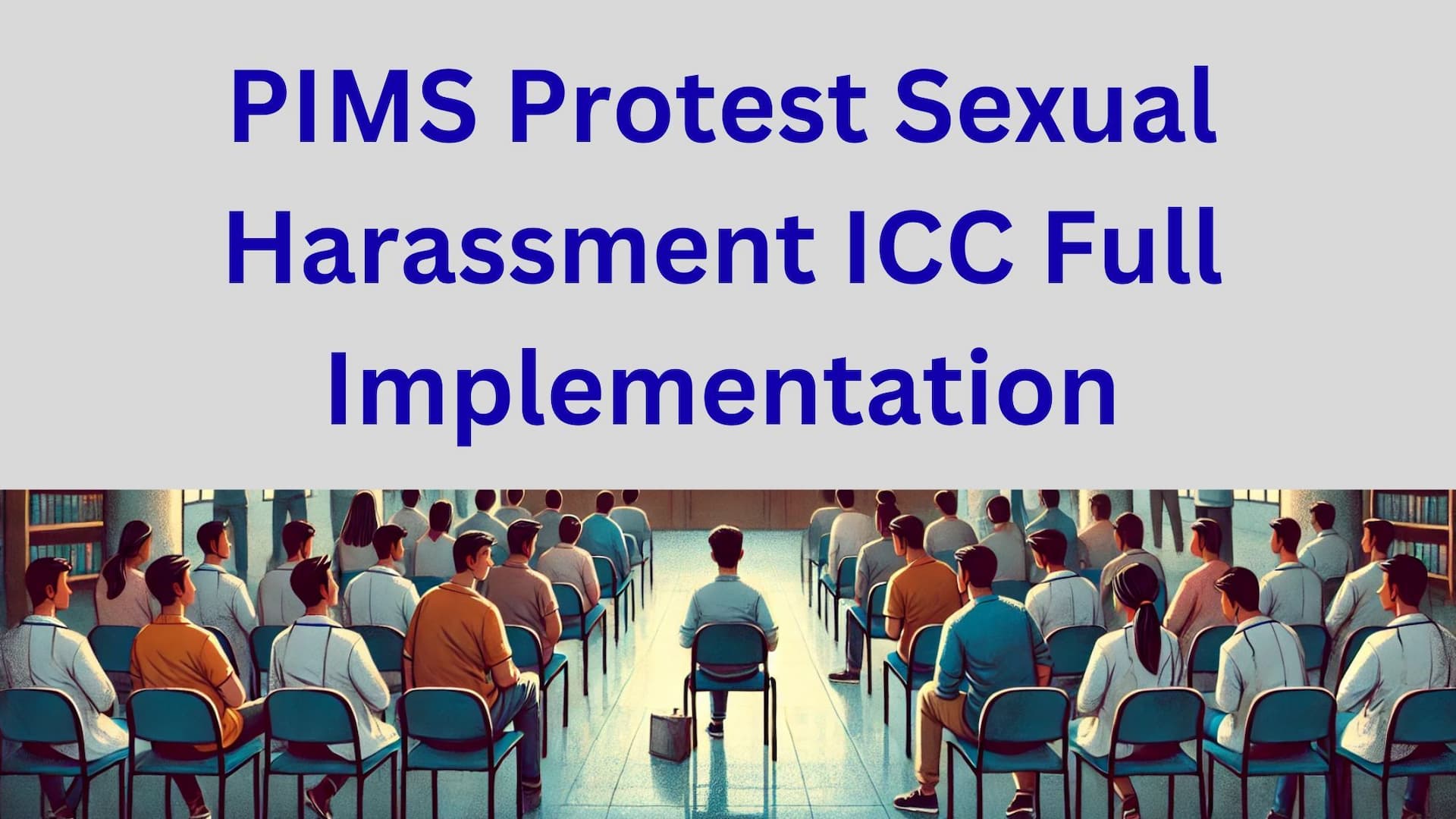
The academic environment, particularly in demanding fields like medicine, must be built on trust, safety, and respect. However, the students at the Pondicherry Institute of Medical Sciences (PIMS), Kalapet, have been compelled to interrupt their studies and resume a campus-wide protest. Their demand is clear: full and non-negotiable compliance with the findings and disciplinary recommendations of the institution's Internal Complaints Committee (ICC) concerning a serious sexual harassment case involving two lab technicians.
The renewed protest, which originally started earlier in November 2025, follows allegations that the PIMS administration failed to execute the ICC’s punitive actions in their entirety, despite having reached an agreement with student representatives just days prior. For current and prospective medical aspirants, this situation underscores the critical importance of effective anti-harassment mechanisms in medical colleges and the proactive role students must play in ensuring justice is served. The institutional response is now under intense scrutiny as the academic community demands accountability.
The Core Conflict: ICC Recommendations vs. Institutional Action
The central issue driving the students’ sustained agitation is the alleged partial, rather than full, implementation of the mandated disciplinary actions against the accused employees. The Sexual Harassment of Women at Workplace (Prevention, Prohibition and Redressal) Act, 2013, requires employers to act on the ICC's recommendations within a stipulated timeframe, a mandate the PIMS students claim has been violated.
- ICC Findings and Recommendations:
- The Internal Complaints Committee, after conducting a thorough inquiry, found the sexual harassment complaints against the two lab technicians to be genuine and substantiated.
- The ICC report reportedly recommended the termination of services for one of the accused persons.
- For the second accused, the ICC recommended a transfer to any other sub-centre or facility operated by PIMS.
- Alleged Partial Compliance:
- PIMS administration confirmed that one of the accused was sacked (terminated), aligning with the ICC's severe recommendation.
- However, the second accused was allegedly only placed under suspension for a specified period and was reportedly seen back on campus after the suspension ended, which the students saw as a failure to implement the transfer recommendation.
- Students’ Demand: The students insist on full institutional compliance, meaning the immediate and permanent transfer of the second accused employee away from the College of Health Sciences to prevent any recurrence or intimidation, viewing anything less as a failure of justice.
The students' immediate return to protest demonstrates their zero-tolerance stance and highlights the urgency for educational institutions to strictly adhere to the legal framework for sexual harassment redressal.
Implications for Medical Aspirants and Institutional Integrity
For prospective medical and health science aspirants considering admission to PIMS or any other institution, the situation provides a crucial insight into the importance of a safe campus environment and the robustness of its internal legal mechanisms.
- Assessing Campus Safety: Incidents like this force aspirants to look beyond academic rankings. They must scrutinize the institution's commitment to the Vishaka Guidelines and the PoSH Act, including:
- ICC Visibility and Composition: Is the ICC clearly constituted, and does it include a mandatory external member and a student representative (though not legally mandatory under PoSH 2013 for student complaints, it is often a UGC/institutional best practice)?
- Response Time and Compliance: A prompt inquiry (legally 90 days) and adherence to the \mathbf{60}-day deadline for implementing the ICC’s recommendations are non-negotiable legal requirements. Delays or partial implementation severely undermine institutional integrity.
- Upholding Legal Mandates: Under the PoSH Act, the employer (the college management) is legally bound to act on the ICC's recommendations. Failure to do so exposes the institution to legal penalties, potentially impacting its reputation and recognition from regulatory bodies like the National Medical Commission (NMC).
- Power of Student Activism: The PIMS students' unified and repeated protest, including organizing and raising slogans for justice, is a testament to the essential role of the student body in demanding accountability from the administration. This activism ensures that the rights of the victims are not overshadowed by institutional reluctance.
Current Status and Next Steps in the PIMS Case
As of today, November 11, 2025, the matter remains unresolved, with the students maintaining their stance until they receive iron-clad assurances of full implementation. The college administration is attempting to manage the situation while awaiting the return of a key decision-maker.
- Management’s Response: A PIMS spokesperson acknowledged the termination of one accused and the suspension of the other. The management stated they were ready to consider the transfer of the suspended individual after the suspension period, but final action would be considered once the PIMS Director, who is currently out of town, returns early next week.
- Police Intervention: Police officials arrived at the campus and mediated talks between the institutional representatives and the protesting students to de-escalate the situation and ensure the safety of all parties.
- Official Inquiry Initiated: Based on the formal complaint lodged by the students, the local police have initiated an official inquiry, which runs parallel to the internal ICC process. This criminal investigation adds another layer of legal scrutiny to the matter.
The students have received assurances, but their continued protest signals a lack of confidence in unwritten promises, emphasizing their demand for documented, irreversible action that prioritizes a safe learning environment.
Conclusion
The renewed protests at the Pondicherry Institute of Medical Sciences demanding the complete execution of the ICC's report on sexual harassment highlight a critical institutional failure in following through on its own justice mechanisms. The case, involving the cancellation of one employee's service and the contested transfer of another, serves as a powerful reminder to all medical aspirants that campus safety is a shared responsibility. While the PIMS management awaits its Director’s return to finalize the decision, the students’ resolve to demand full compliance ensures that accountability remains at the forefront of this high-stakes issue.
For regular updates follow Only Education News. For more details on medical entrance exams and courses, check here: Medical Exams List.