
Scholarships Gone? 4 Medical Colleges in Maharashtra Dodge Rules
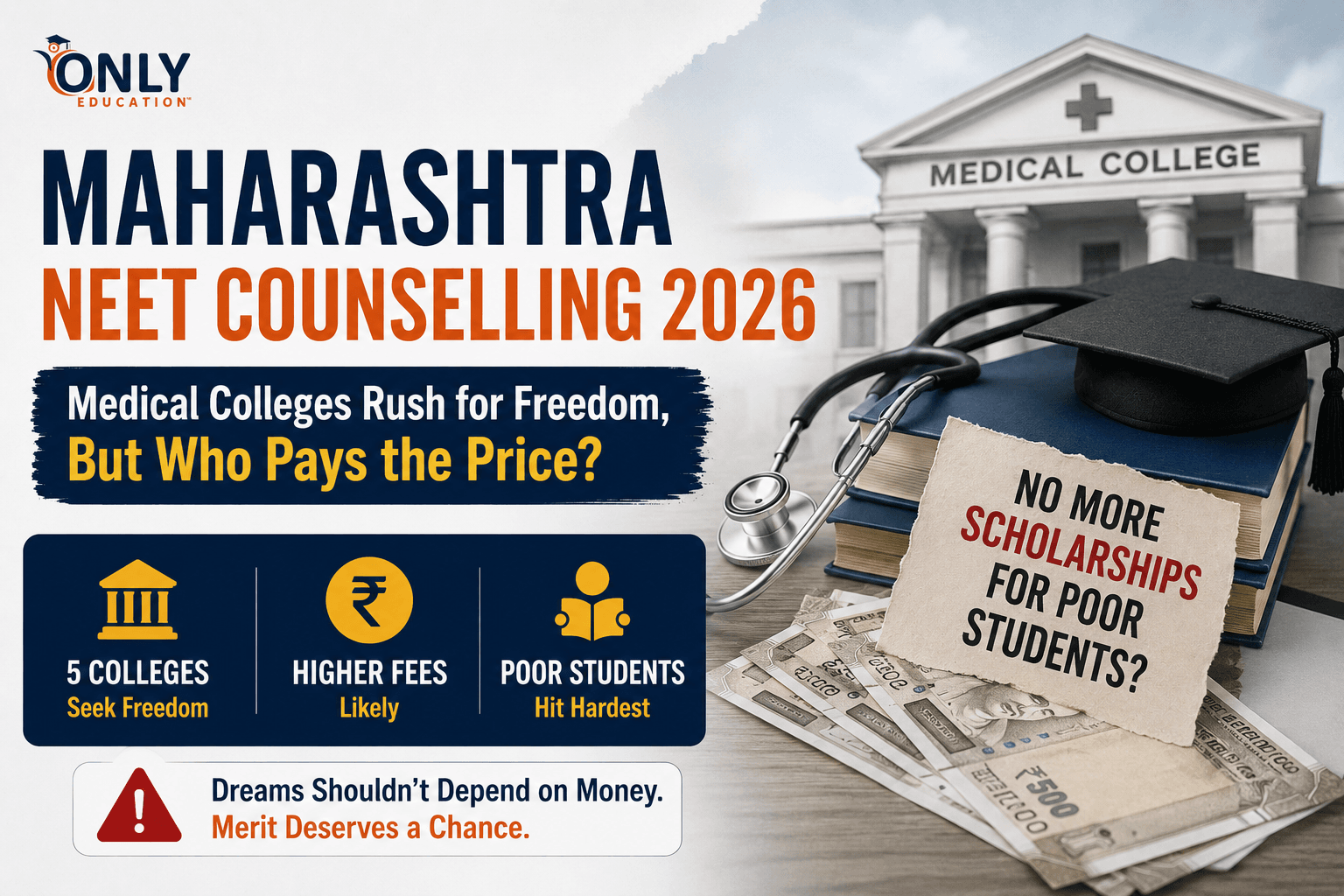
Picture this: a bright student from a small town in Maharashtra spends years grinding for NEET. Late nights, coaching fees the family could barely afford, the constant pressure of "just get a good rank and everything will work out." She finally cracks it. She gets a seat. And then — the scholarship she was counting on to actually afford that seat quietly disappears.
That's not a hypothetical anymore. It's already happening.
The Quiet Escape Plan
Four private medical colleges in Maharashtra are working their way out of state control — and they're not all using the same door. Some are chasing deemed university status. Others want to become private universities. One has already transformed itself into a company. Different paperwork, same goal: freedom to set their own fees, without the government watching.
Here's who's doing what:
- KJ Somaiya Medical College, Mumbai — applied to become a deemed-to-be-university
- Dr Vithalrao Vikhe Patil Foundation's Medical College, Ahilyanagar & NKP Salve Institute, Nagpur — both racing for state private university status
- Prakash Institute of Medical Science, Sangli — already converted from a charitable trust into a Section 8 company
- BKL Walawalkar Rural Medical College, Ratnagiri — has approached UGC for deemed university status (medicine's not included yet, but it's coming)
For context, Maharashtra runs on 85 medical colleges — 43 government, 42 private. Until last month, private universities in the state weren't even legally allowed to teach medicine. That door just swung open.
The Line That Should Stop You Mid-Scroll
Here's what actually happened at PIMS Sangli the moment it became a company: the Maharashtra CET Cell told applicants — including those applying to its sister Ayurvedic college — that they would no longer be eligible for scholarships or fee waivers meant for students from disadvantaged backgrounds.
Not higher fees. Not reduced benefits. Gone. Completely.
The college's dean says nothing "drastic" is changing and that this was mostly about chasing NAAC accreditation more smoothly. Maybe that's true. But somewhere, a student who was banking on that scholarship just found out it doesn't exist anymore — and that's not a technicality, that's someone's future.
"We're Not Doing This for Money" — The Colleges' Side
Talk to the colleges, and the story sounds reasonable, even sympathetic. They want academic freedom. Faculty exchange programs. Flexible curriculum design. An escape from what one administrator bluntly called "bureaucratic hurdles" and "red-tapism."
And honestly? Some of their frustration is legitimate. Colleges say government scholarship reimbursements take two to three years to come through — sometimes piling up to four or five months' worth of unpaid staff salaries. That's not a small problem. That's an institution struggling to keep its lights on.
But here's the uncomfortable math nobody's saying out loud: fixing a college's cash-flow crisis by cutting off a poor student's scholarship isn't a solution. It's just moving the burden from the institution's balance sheet onto a family that has far less room to absorb it.
"The Government Is Crushing Their Dreams"
Career counsellor Muzaffar Khan didn't soften his words: "This is very sad news for children from low-income families in Maharashtra... The Maharashtra government is crushing the dreams of children from poor families to become MBBS doctors."
Medical student and activist Abdurrehman Khan went further: "If this continues, one by one, all colleges will eventually be converted to PVT LTD status... Even students who score good marks may not be able to get admission to these colleges because of the high fees."
Sit with that for a second. A student could work hard enough, score high enough, deserve that seat completely on merit — and still lose it. Not because they weren't good enough. Because they weren't rich enough.
So What Happens Now?
Three of these colleges are already provisionally part of Maharashtra's NEET UG 2026 state quota counselling, with a note quietly flagging their pending applications. Two are racing to finalize their new status before this year's counselling round even closes.
If you're applying through Maharashtra's counselling this year, do yourself a favour: don't just check a college's rank or reputation. Check its current legal status too — because scholarship eligibility might not look the same by the time admissions actually close.
For thousands of students chasing a white coat, that's a detail that could decide everything.