Massive Fee Relief: PIMS Management Quota Aligns with Government Fees

In a major relief for NEET PG 2025 aspirants, the Pondicherry Institute of Medical Sciences (PIMS) has announced a significant reduction in the annual tuition fees for Postgraduate (PG) Non-Clinical courses under the Management Quota. The revised fees are now aligned with the much lower State Government Quota fees, effective for the 2025-26 academic year. This unprecedented move is aimed at addressing the perennial issue of vacant non-clinical seats, making specialised medical education affordable and accessible to a wider pool of deserving candidates. This is a game-changer for students considering specialities like Anatomy, Physiology, and Pathology.
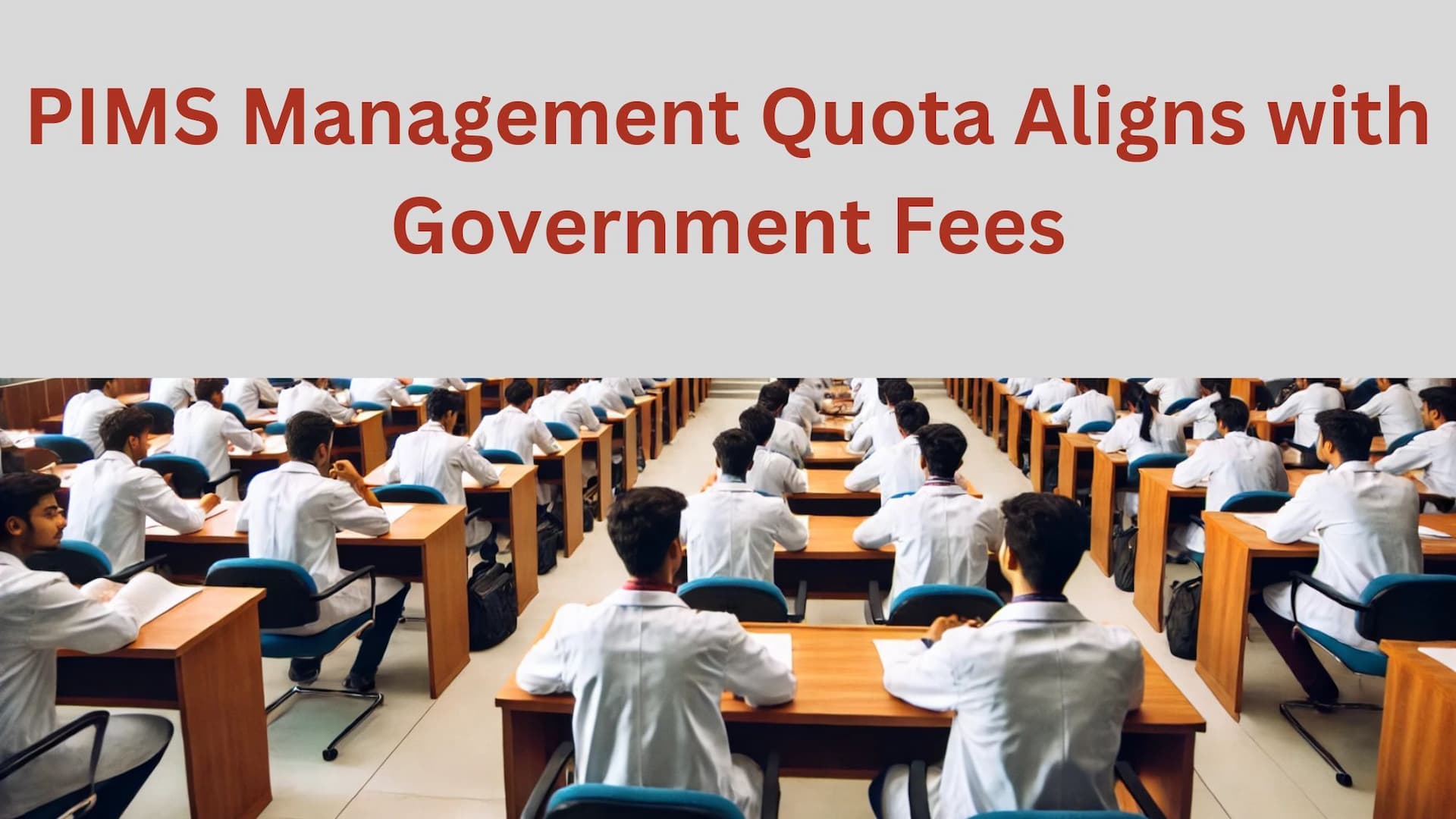
The medical education landscape has witnessed a significant positive shift for aspiring postgraduates. In a landmark decision effective for the 2025-26 academic year, the Pondicherry Institute of Medical Sciences (PIMS) has officially aligned the annual tuition fees for Management Quota seats in PG Non-Clinical medical courses with the rates applicable for State Government Quota seats. This move represents a dramatic reduction in financial burden, offering a substantial boost to students aiming for specializations in fields such as Anatomy, Biochemistry, and Microbiology.
For years, the vast disparity between Government Quota and Management Quota fees has been a major point of contention, often making specialized medical education prohibitively expensive for many. This progressive step by PIMS, driven by the challenge of consistently unfilled non-clinical seats, transforms the opportunity landscape for numerous NEET PG qualified candidates. It ensures that merit, rather than financial capacity, becomes the primary determinant for securing a seat in these essential medical disciplines. This is especially crucial as non-clinical branches form the backbone of medical research and diagnostics.
Unprecedented Financial Parity for PG Aspirants
The core of this transformative announcement lies in the equalization of fees, a measure designed to fill the long-standing vacuum in non-clinical seats and ensure a steady supply of qualified faculty and researchers.
- Dramatic Fee Reduction: The Annual Tuition Fees for Management Quota seats in non-clinical subjects, which were previously significantly higher (approximately ₹13,05,000/- per annum in the previous year), have been slashed to match the Government Quota fee of ₹6,55,000/- per annum for the 2025-26 academic session.
- Courses Included: This parity applies to all non-clinical MD/MS courses, including but not limited to:
- MD Anatomy
- MD Physiology
- MD Biochemistry
- MD Pharmacology
- MD Pathology
- MD Microbiology
- MD Community Medicine
- Addressing Vacancy: The institute’s management acknowledged that the decision was taken as over 75% of the non-clinical specialities have remained vacant, highlighting a national trend where high costs often deter candidates from pursuing these vital fields. This new fee structure removes a major financial barrier.
Impact on NEET PG 2025 Counselling
This fee revision is a critical factor for all NEET PG 2025 qualified candidates participating in the counselling process, particularly through the Centralised Admission Committee (CENTAC) in Puducherry. Students with lower-to-mid-range NEET PG scores, who might have missed out on government clinical seats, now have a highly economical and quality option in a deemed institution.
- Boost for Non-Clinical Specialties: With the fees now at an accessible government-level rate, there is an expected surge in demand for non-clinical seats, leading to a much more competitive counselling environment for these branches. Aspirants should thoroughly research the prospects and career growth in non-clinical specialties.
- Strategic Choice Filling: Candidates who might have previously overlooked PIMS due to the high Management Quota fee must now strategically include these non-clinical courses in their choice filling. The low-fee, high-quality proposition is difficult to ignore.
- Total Course Expense: While the tuition fee is significantly reduced, aspirants must factor in other non-tuition costs such as hostel, mess, and caution deposits which are charged separately. However, the total course expenditure will be almost halved compared to the previous management quota fee structure. This makes a PIMS non-clinical seat financially comparable to many central or state-run government institutions.
Long-Term Implications for Medical Education
PIMS’s decision sets an important precedent for other private and deemed medical universities across the country struggling with non-clinical seat vacancies. The move underscores a shift towards prioritizing the accessibility of specialized training over maximizing revenue in these foundational medical branches.
- Quality of Education: The PIMS management committee emphasized that the fee reduction for non-clinical courses is made without prejudice to their persistent representations to increase the fees for the more sought-after clinical specialties. This dual approach aims to use the revenue from high-demand clinical courses to cross-subsidize the non-clinical departments, ensuring that the quality of infrastructure and faculty remains high across the board.
- Career Pathways: Non-clinical specialties, such as Pathology and Microbiology, offer robust career paths in diagnostics, research, and academia. With the reduced fee, more graduates will be encouraged to explore these fields, ultimately strengthening India's public health and academic medical sectors.
This also aids in meeting the long-term need for qualified medical teachers as mandated by the National Medical Commission (NMC).
- Equity and Access: The new policy promotes equity in medical education, providing a tangible opportunity for meritorious students from less affluent backgrounds to pursue postgraduate specialization without incurring a massive educational debt.
Conclusion
The alignment of Management Quota fees with Government Quota fees for non-clinical PG courses at PIMS is a significant, progressive step for the academic year 2025-26. It's a clear signal that the institution is committed to filling its academic seats and supporting the fundamental pillars of medical science by making these crucial specialities financially viable. This move provides a substantial advantage to thousands of NEET PG aspirants who can now secure quality specialized education at a much reduced cost.
Aspirants for NEET PG 2025 must monitor the CENTAC counselling portal closely to take advantage of this golden opportunity in their next choice filling and seat allotment process.
For regular updates follow Only Education News. For more details on medical entrance exams and courses, check here: Medical Exams List.
