
NEET UG 2026 Dress Code Explained: What Male and Female Candidates Can and Cannot Wear on Exam Day
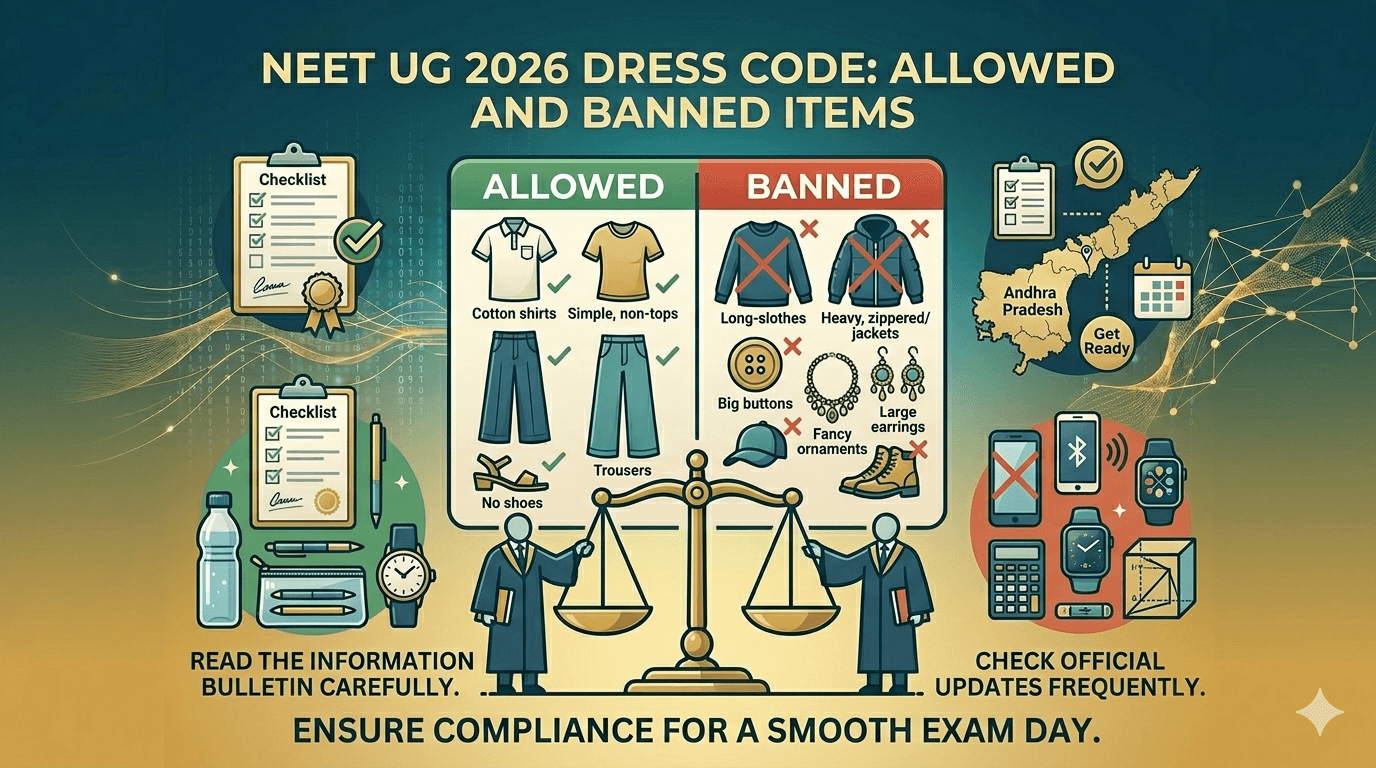
The National Testing Agency (NTA) has set a strict dress code for those taking the National Eligibility cum Entrance Test (NEET UG) in 2026. These rules are meant to ensure fairness, stop cheating, and help with security checks at exam centres across the country. If a candidate doesn't follow the dress code, they might face delays during the search or even be stopped from entering the exam hall. NEET is one of the biggest medical entrance exams in India, so it's important for all candidates to carefully check what they can and cannot wear before heading to the exam centres.
Why Does NTA Have a Dress Code?
The dress code helps security checks go more smoothly. All candidates must go through a search using metal detectors before entering the exam hall.Clothing that has lots of layers, metal parts, or hidden pockets can cause problems and lead to more checks.
NEET 2026 Dress Code for Male Candidates
Men are advised to wear simple and comfortable clothes.
Allowed
Light-colored shirts or T-shirts
Half-sleeve clothing
Simple trousers or pants
Clothes without many pockets
Slippers or sandals with thin soles
Not Allowed
Full-sleeve shirts or T-shirts
Jackets, coats, hoodies, or layered clothing
Kurta-pyjama
Clothes with big buttons
Garments with many pockets or zippers
Shoes, boots, or covered footwear
Caps or headgear unless for religious reasons
NEET 2026 Dress Code for Female Candidates
Women must also follow a simple and non-decorative dress code.
Allowed
Light-colored, half-sleeve dresses or tops
Simple salwar-kameez without heavy embroidery
Trousers or simple lower clothing
Low-heel sandals or slippers
Comfortable clothes with little stitching or decoration
Not Allowed
Heavy embroidered dresses
Full-sleeve clothes unless declared as customary dress
Jewelry, earrings, rings, pendants, bracelets, and nose pins
High-heeled shoes
Closed shoes or boots
Dresses with big metal buttons or decorative items
List of Prohibited Items Inside the Examination Centre
Candidates are not allowed to bring these items:
Electronic Devices
Mobile phones
Smartwatches
Bluetooth devices
Earphones
Calculators
Pen drives
Electronic pens
Personal Accessories
Wallets
Handbags
Belts with metal buckles
Sunglasses
Hair clips with metal
Any type of jewelry
Study Materials
Notes
Books
Printed papers
Rough sheets
Log tables
Other Restricted Items
Food items (except for medical needs)
Non-transparent water bottles
Any metallic object
Communication devices
Items Allowed Inside the NEET Exam Hall
Candidates can take these items into the exam hall:
- NEET 2026 Admit Card
- Valid Photo ID
- Passport-sized photo as specified by NTA
- Transparent water bottle
- PwD certificate (if applicable)
- Medical documents for diabetic candidates, as allowed by NTA
Rules for Candidates Wearing Religious or Customary Dress
NTA allows candidates to wear religious or traditional clothing. However, they should inform the exam center in advance so that security arrangements can be made.Candidates who wear such attire usually need to mention it while applying.
Important Advice for NEET Aspirants
Experts suggest wearing simple, light-colored half-sleeve clothes and slippers to avoid delays. Candidates should not try new outfits on the day of the exam and should carefully read the instructions on their admit cards.Many students on online forums also warn against wearing clothes with decorative buttons, metal parts, or extra pockets, as these often result in extra checks.
Conclusion
Following the NEET 2026 dress code is just as important as having the admit card and ID proof. Both male and female candidates should choose simple, comfortable clothing that has no metal parts, large buttons, or extra layers.By following the guidelines from NTA, candidates can ensure a smooth entry into the exam hall and focus entirely on their performance in one of the country's most competitive medical entrance exams.