
Karnataka to Introduce STEAM Education in Government Schools; Robotics and Coding to Be Taught Through Hands-On Learning
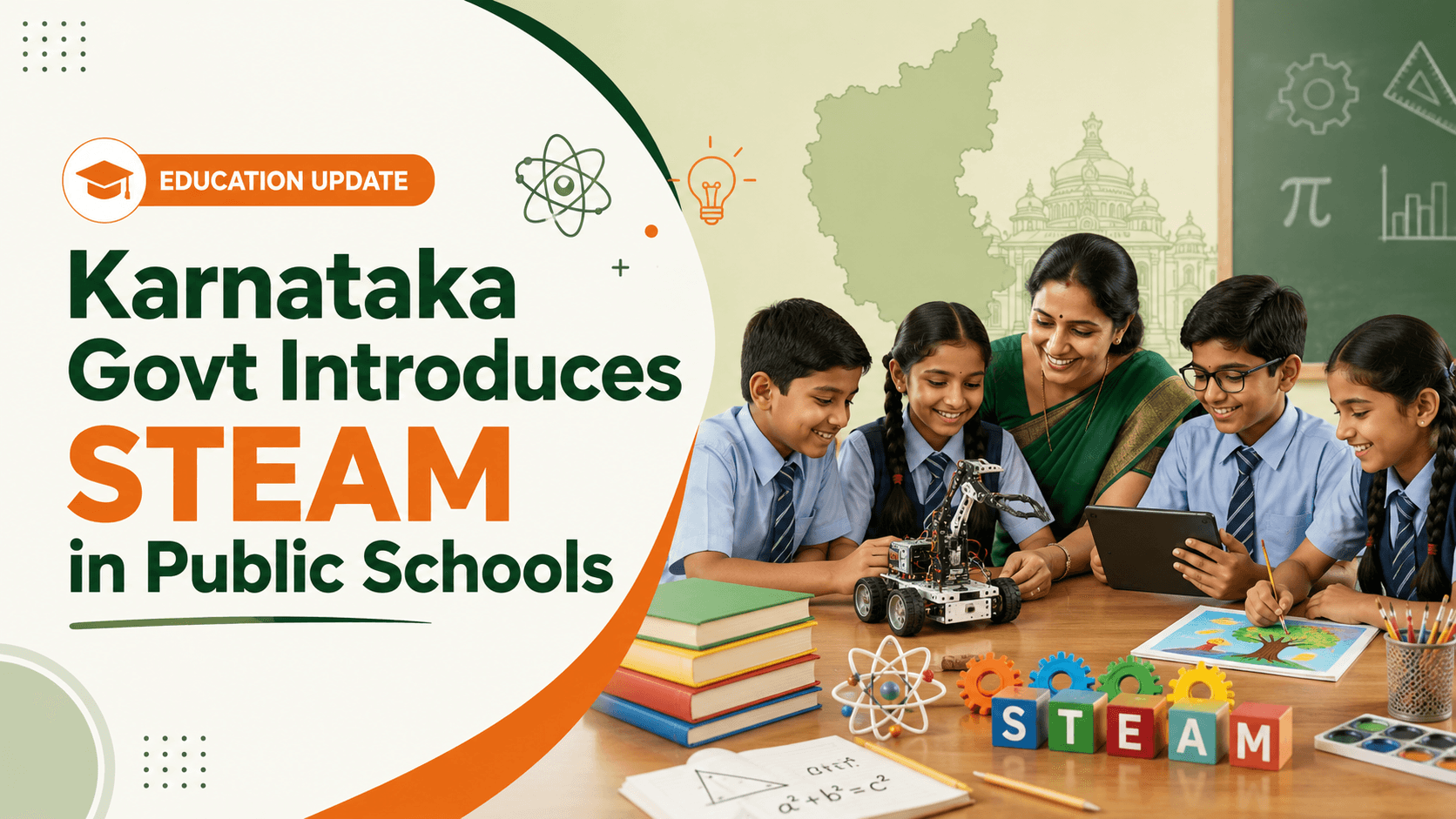
Marking a significant move to update public schooling, the Karnataka administration has chosen to roll out STEAM (Science, Technology, Engineering, Arts and Mathematics) learning in state-run schools. Under this plan, robotics and coding will be taught through practical, hands-on work so students gain skills suited to the future and improve their capacity to solve problems. Execution will be led by the Department of School Education and Literacy, which intends to move emphasis away from standard classroom methods and toward ability-focused, experience-led learning. The department says the scheme is meant to build analytical skills, creativity, innovation, and better-informed career decisions from a young age.
Robotics and Coding to Be Introduced Through Practical Learning
Rather than relying on the usual theory-heavy approach, the updated STEAM course will prioritise projects and practical work. Learners will encounter robotics, coding, and additional new technologies via interactive class tasks that promote testing ideas and tackling real-life problems. Authorities feel that giving students science and technology exposure early will foster logical thinking and innovation while getting them ready for fast-changing roles in tech and engineering.
Focus on Future-Ready Skills
The state government stated that the central aim of the scheme is to ready students for shifting expectations in higher studies and the worldwide job market. By bringing science, technology, engineering, arts, and mathematics together within one learning structure, the state seeks to develop key 21st-century abilities such as:
- Critical thinking
- Problem-solving
- Creativity and innovation
- Collaboration and communication
- Digital literacy
- Design thinking
- Adding the Arts element is meant to encourage imagination alongside technical understanding, helping learners form a balanced way of studying.
Bridging the Gap Between Government and Private Schools
Specialists in education have praised the decision, pointing out that numerous private institutions already include STEM-style subjects in their programmes starting in middle school. Bringing STEAM into government schools is anticipated to narrow that divide by giving students access to current technologies and learning experiences tied to industry needs, whatever their schooling background. School leaders have called the effort a vital move to help public-school students compete better in higher education and later careers.
Pilot Implementation and Expansion Plans
Reports indicate that STEAM-oriented learning has already started at a government school in Chikkamagaluru, where students are studying coding, computer science, artificial intelligence, and other tech-centered topics through activity-based practice. The state intends to roll out the program to roughly 300 Karnataka Public Schools (KPS) operating across the region and to extend it further as additional KPS campuses begin functioning.
Aligning Education with Industry Needs
The Department of School Education and Literacy holds that bringing robotics, coding, and STEAM areas into schools will support students in choosing careers wisely while boosting their preparedness for industries driven by technology. As demand rises for workers proficient in artificial intelligence, automation, programming, and digital tools, the government expects that early study of these areas will build a firmer base for higher education and later job prospects.
A Shift Towards Skill-Based Education
Launching STEAM represents an important change in Karnataka’s curriculum, replacing memorization-focused learning with experience-based education. By linking science, technology, engineering, arts, and mathematics to real use cases like robotics and coding, the state wants classrooms that spark curiosity, innovation, and continuous learning. The program is expected to be crucial in readying government-school students for the digital economy while making sure they have the technical and creative abilities demanded by a fast-changing workplace.