JEE Advanced 2026 Aspirants Fine-Tune Preparation Strategy

With JEE Advanced 2026 set for May 17, aspirants are refining strategies. IIT Roorkee leads the exam as students focus on multi-concept problems and mock tests.
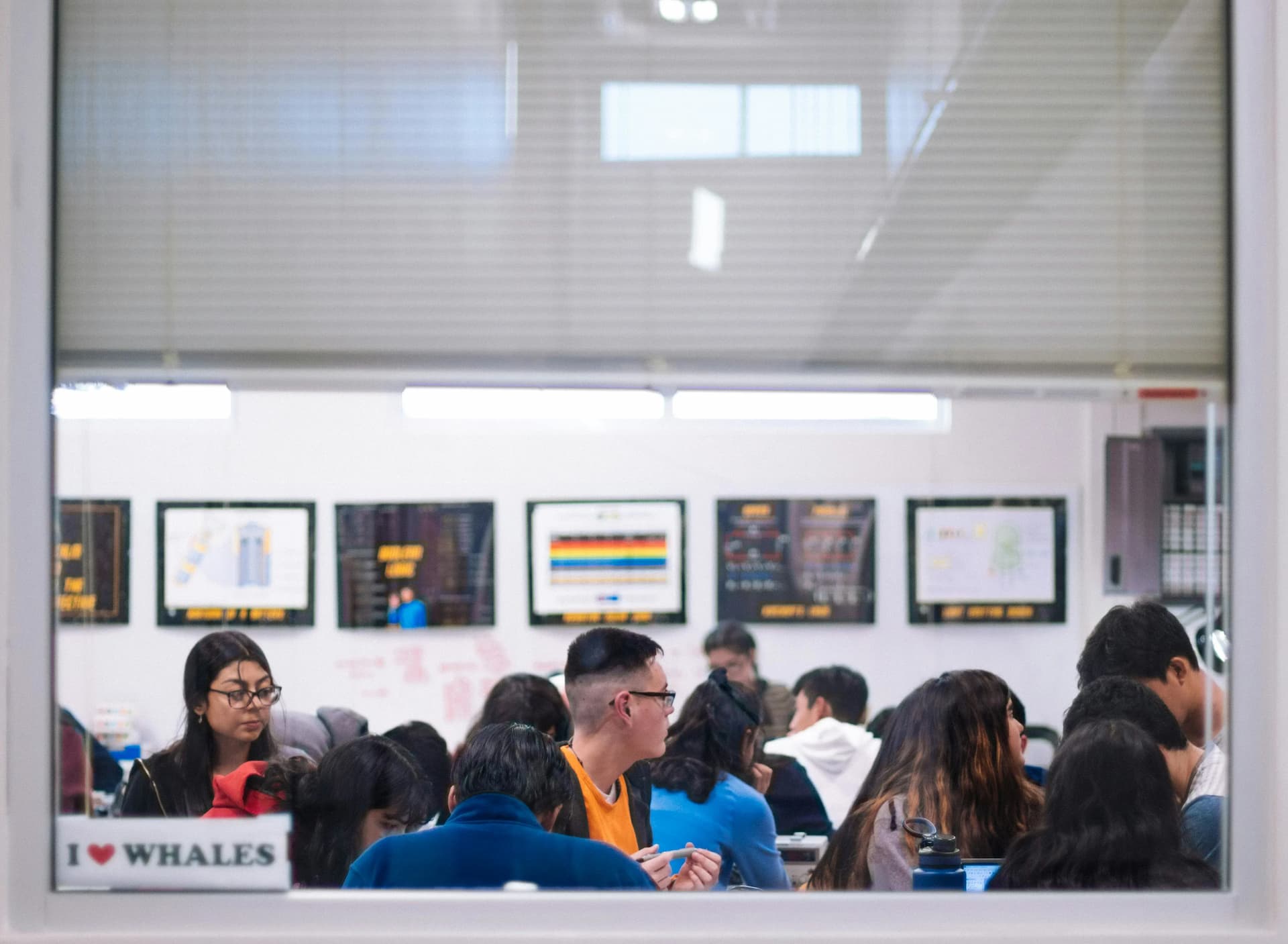
As the engineering entrance season intensifies, serious candidates for the Advanced tier of the IIT entrance system have begun shifting their focus toward high-level problem-solving. While the immediate priority for many remains the JEE Main Session 1 starting next week, dedicated IIT-aspirants are already dedicating specific slots to master the deeper complexities of the May 17 examination. Organized this year by IIT Roorkee, the test is expected to maintain its reputation for unpredictable marking schemes and challenging multi-concept questions. Experts suggest that mid-January is the ideal window to bridge the gap between the speed-oriented Main format and the depth-heavy requirements of the next stage.
Shifting Focus to Multi-Chapter Integration
Unlike the preliminary rounds, the Advanced examination rarely features direct, single-concept questions. Instead, the papers are designed to test a candidate's ability to synthesize information from various parts of the syllabus simultaneously.
- Physics Integration: Current trends show a rise in problems that merge Rotational Mechanics with Electrostatics, demanding a high degree of fluid thinking.
- Chemistry Depth: In Organic Chemistry, students are moving beyond basic reactions to focus on complete synthesis chains and mechanism-based concepts.
- Mathematics Complexity: Calculus and Vectors are being practiced with an emphasis on geometrical interpretations, which is a staple of the IIT Roorkee question-setting style.
- Syllabus Mastery: Aspirants are currently auditing their notes to ensure that 100% of the high-weightage topics are covered with the analytical rigor required for the second stage.
Subject | Focus Area for January | Recommended Practice |
Physics | Mechanics & Electromagnetism | Multi-concept derivation-based problems |
Chemistry | Organic Mechanisms & Coordination | Comprehensive reaction maps |
Mathematics | Calculus & Probability | Proof-based and graphical problems |
Aptitude | Comprehension Type | Reading and data-extraction drills |
Utilizing Previous Year Question Papers
A cornerstone of the current preparation phase involves the meticulous analysis of previous years' papers. By deconstructing the 2024 and 2025 exams, students are identifying the subtle shifts in question types and difficulty levels.
- Pattern Recognition: While the official pattern is only revealed on the exam day, solving past papers helps students build the mental flexibility to handle integer-type, multiple-correct, and matrix-match questions.
- Time Management: Aspirants are now taking these tests in two 3-hour sessions to simulate the actual six-hour marathon scheduled for May.
- Accuracy over Speed: In these high-level concepts, the goal is shifting from the number of attempts to the precision of the final answer, especially in sections with partial marking.
- Analytical Review: Top-tier coaching centers are urging students to maintain a "Mistake Log" from these old sets to avoid repeating conceptual errors in the final month.
Strengthening Mental Resilience and Stamina
The announcement by the IIT Council regarding potential future shifts toward adaptive testing has added a layer of discussion to current sessions, though the 2026 format remains a traditional CBT. However, the analytical demand of the six-hour test remains the primary hurdle for most students.
- Stamina Building: Candidates are gradually increasing their continuous study hours to match the intensive nature of the two-paper format.
- Analytical Thinking: This week marks a transition from rote learning to "first-principles" thinking, as IIT Roorkee often prioritizes logical derivation over memorized formulas.
- Simulation Environment: Using high-quality mock platforms that replicate the IIT interface is helping students reduce technical friction, allowing them to focus entirely on the core Advanced level challenges.
Conclusion
As of January 13, the preparation for the country's most prestigious engineering entrance is entering a specialized phase. While the JEE Main provides the gateway, the Advanced stage requires a fundamental shift in how candidates perceive and solve problems. By integrating complex concepts and practicing with authentic past papers, students are ensuring they are not just ready to qualify, but ready to compete for the limited seats in the premier IITs. The journey toward the May 17 exam, led by IIT Roorkee, remains a test of both academic excellence and psychological endurance.
For regular updates follow Only Education News. For more details on engineering entrance exams and courses, check here: Engineering Exams List.
