Health Ministry Data Shows India Now Has 818 Medical Colleges Nationwide

As of February 18, 2026, official Health Ministry data confirmed by the Lok Sabha reveals that India now has 818 medical colleges. This record expansion includes 1,28,976 MBBS and 85,020 PG seats, marking a massive surge in medical education infrastructure. The growth, driven by the National Medical Commission since 2020, aims to improve the doctor-population ratio across all states. Uttar Pradesh, Maharashtra, and Tamil Nadu lead the nation in total institutional count for the 2025-26 academic session.
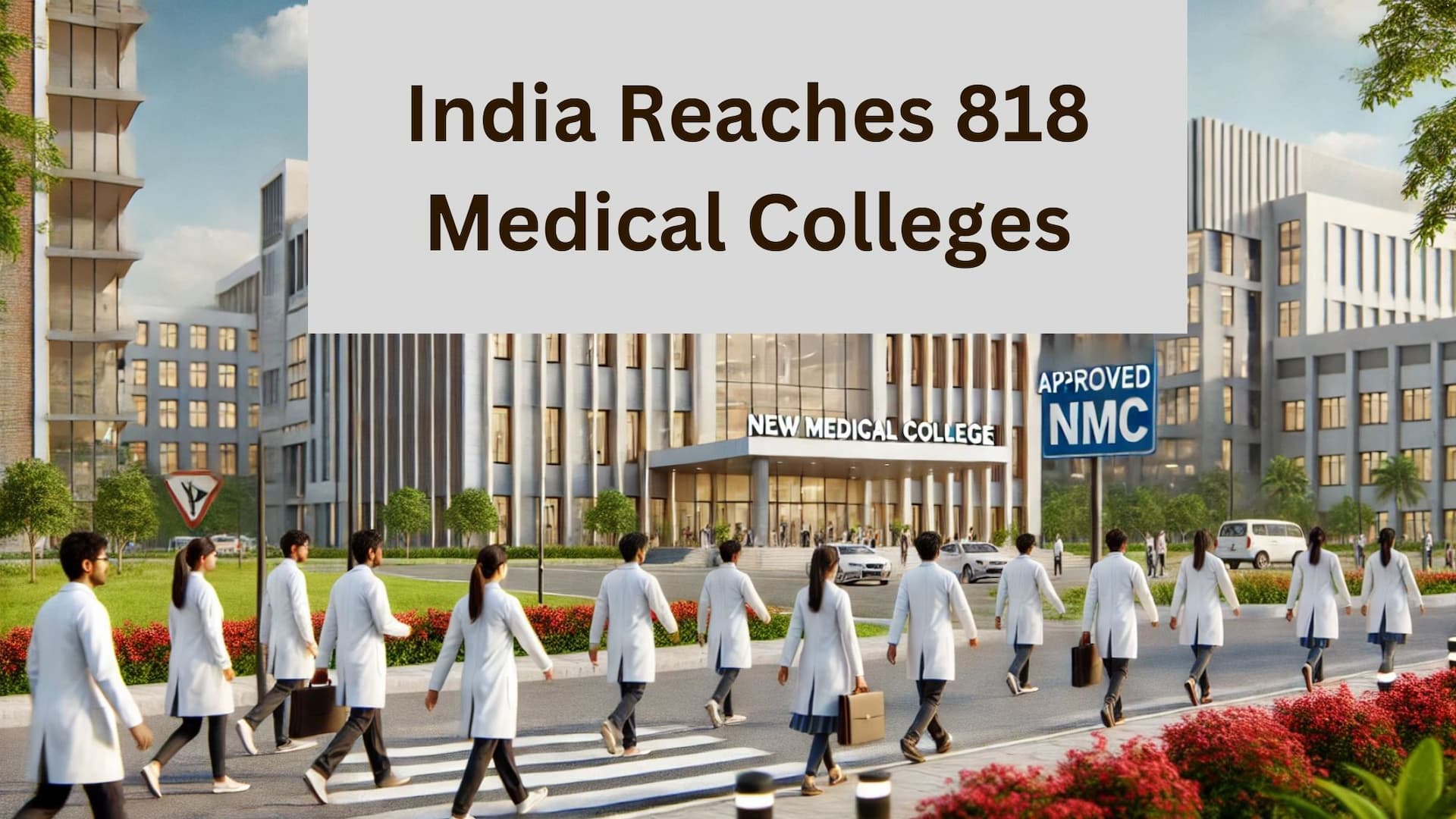
The Union Ministry of Health and Family Welfare (MoHFW) has informed the Lok Sabha that India’s medical education landscape has reached a historic milestone. As of February 18, 2026, the country officially hosts 818 medical colleges, a significant increase from 596 institutions recorded in the 2021-22 academic year. This data, presented by the Minister of State for Health, Prataprao Jadhav, underscores a period of aggressive infrastructure expansion aimed at addressing the long-standing shortage of healthcare professionals. According to the National Medical Commission (NMC), this growth has successfully pushed the total number of undergraduate seats to 1,28,976, providing unprecedented opportunities for medical aspirants nationwide.
1. Significant Surge in Undergraduate and Postgraduate Capacity
The official report presented in Parliament highlights that the expansion is not limited to primary degrees. The capacity for specialization has also seen a robust upward trajectory over the last five years.
- MBBS Seat Growth: Undergraduate seats have increased by over 46%, rising from 88,120 in 2021 to nearly 1.29 lakh in the current session.
- Postgraduate Expansion: The number of PG seats has grown from 55,595 to 85,020, ensuring that a higher percentage of MBBS graduates can pursue specialized MD/MS/DNB programs.
- Government vs. Private Balance: Of the 818 total colleges, the government continues to lead the infrastructure drive, particularly through the Centrally Sponsored Scheme (CSS) which attaches new colleges to existing district hospitals.
- NMC Regulations: The Minimum Standards Requirements (MSR) 2023 guidelines have been instrumental in facilitating this capacity increase by relaxing faculty and land norms for new institutions.
2. State-Wise Distribution of Medical Institutions
The Health Ministry data reveals a diverse geographical spread of these 818 colleges. While traditional educational hubs continue to dominate, there is a visible shift toward improving infrastructure in underserved and aspirational districts.
| State/UT | Government Colleges | Private Colleges | Total Colleges (2026) |
| Uttar Pradesh | 51 | 37 | 88 |
| Maharashtra | 43 | 42 | 85 |
| Tamil Nadu | 38 | 40 | 78 |
| Karnataka | 24 | 48 | 72 |
| Telangana | 37 | 29 | 66 |
- Northern Leaders: Uttar Pradesh has emerged as the state with the highest number of medical colleges, largely due to the "One District, One Medical College" initiative.
- Southern Strength: Tamil Nadu and Karnataka maintain their status as top contributors to the national capacity, hosting the highest concentration of private medical seats.
- Aspirational Districts: Under Phase III of the CSS, 157 new colleges have been approved, with 108 already becoming functional by this February session.
- Doctor-Population Ratio: With 13.86 lakh registered allopathic doctors, the MoHFW estimates the current ratio at 1:811, surpassing the WHO recommendation of 1:1000.
3. Conclusion
The revelation that India now possesses 818 medical colleges serves as a testament to the government’s commitment to healthcare infrastructure. As of February 18, 2026, the focus has shifted from mere establishment to the maintenance of high-quality medical education standards. The PIB Delhi release indicates that an additional 75,000 seats are targeted for the next five-year cycle, ensuring the capacity for medical training keeps pace with the growing population. For students currently navigating the 2025-26 session, these numbers represent more than just statistics; they are a gateway to diverse residency options and a more resilient national health system. As these 818 colleges become fully integrated, the ultimate goal remains to ensure equitable access to quality healthcare for every citizen, regardless of their regional location.
For regular updates follow Only Education News. For more details on medical entrance exams and courses, check here: Medical Exams List.
