
America Breaks Ground: Bunker-Buster Bomb Hits Iran’s Underground Nuclear Site

The United States has launched a significant airstrike on Iran’s fortified Fordo nuclear facility, using the GBU-57 Massive Ordnance Penetrator—a powerful “bunker-buster” bomb—delivered by a B-2 Spirit stealth bomber. This action marks a major escalation in the Israel-Iran conflict, revealing capabilities Israel lacks to strike such a site. The article explores the bomb, the aircraft, the strategic target, and the far-reaching global consequences of this unprecedented U.S. military operation.
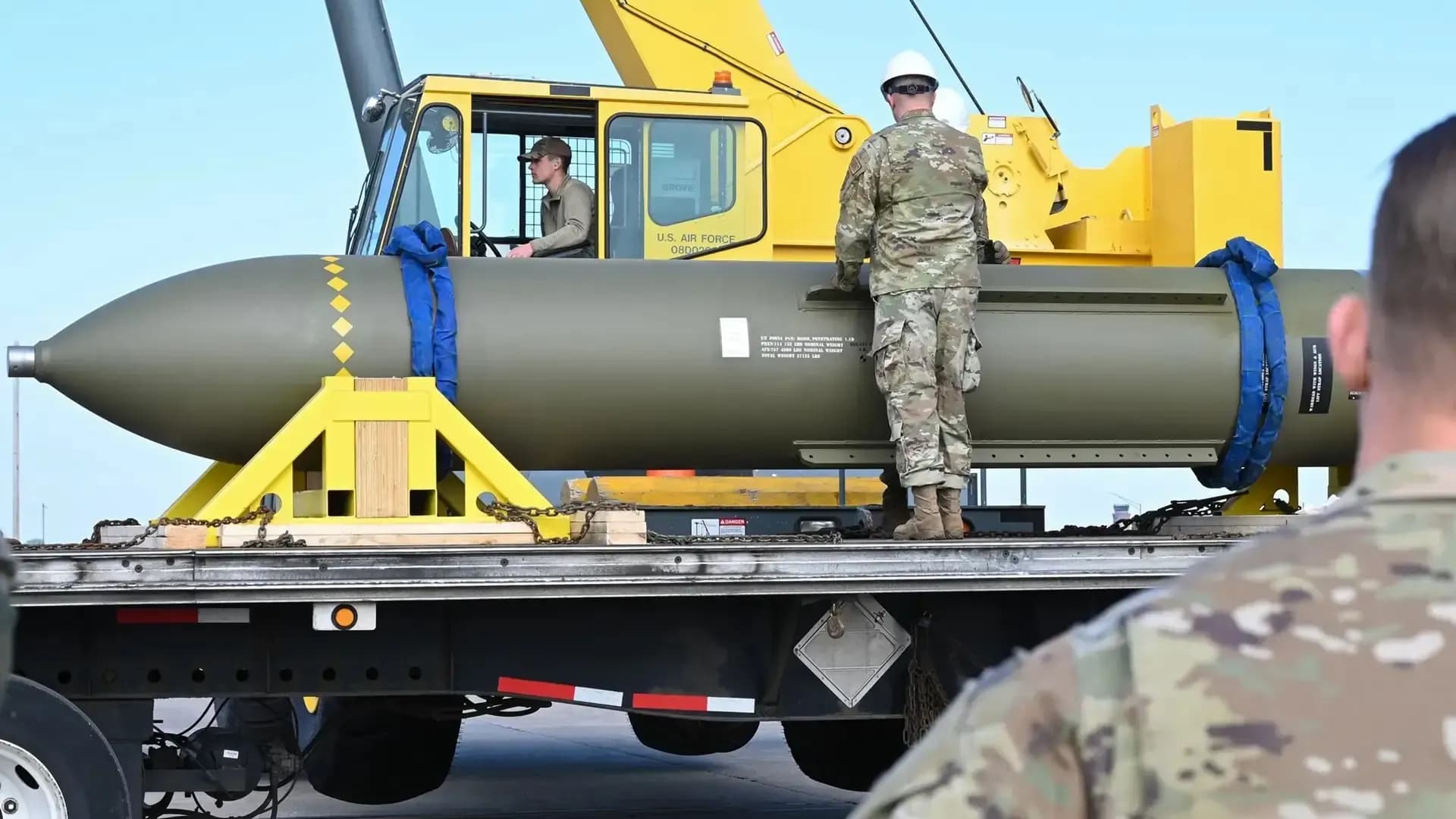
In a significant development regarding the ongoing conflict between Israel and Iran, the United States has taken direct military action by conducting precision airstrikes on Iranian territory, notably targeting the Fordo nuclear facility, which has long been considered impervious to such assaults. This operation represents the first confirmed use of the U.S. military’s most advanced non-nuclear weapon, the GBU-57 Massive Ordnance Penetrator (MOP), in a combat scenario.
- A Pivotal Military Operation
On this occasion, U.S. President Donald Trump announced that American forces successfully executed strikes on three strategic sites in Iran, including the underground Fordo uranium enrichment facility, which had withstood prior Israeli efforts. While damage assessments are still ongoing, this operation is being recognized as a crucial moment in both regional military dynamics and international nuclear non-proliferation efforts.
The GBU-57 MOP, a substantial 13,000-kg "bunker buster" specifically engineered to neutralize deeply buried military infrastructure, was integral to the mission’s success. Fordo, located approximately 90 meters beneath the surface in hardened rock, had previously been deemed beyond the reach of any non-nuclear strike capabilities, except for those of the United States.
- Rationale for U.S. Involvement
Despite Israel's sophisticated air force and comprehensive intelligence capabilities, the nation does not possess the military assets required to effectively target Fordo. The Israeli Air Force’s F-35s and existing munitions are insufficient for breaching the facility's fortified depths.
The MOP, which can penetrate over 60 meters of earth and concrete before detonation, represents the only known conventional weapon that poses a threat to such fortified sites. This deployment confirms speculation that Israel has been advocating for U.S. assistance in utilizing its unique capabilities to impede Iran's nuclear advancements.
- The B-2 Spirit: A Stealth Bomber of Distinction
Executing this operation necessitates a specialized aircraft: the B-2 Spirit stealth bomber. Exclusively operated by the U.S. Air Force, the B-2 is the sole platform capable of carrying and deploying two MOPs in a single mission. With its advanced flying-wing design and state-of-the-art stealth technology, the B-2 can avoid radar detection while performing intercontinental missions — often requiring only one mid-air refuelling.
With only 19 operational B-2 aircraft, each valued at over $2 billion, their deployment underscores the mission's critical importance. This operation marks the B-2’s latest engagement in significant combat, adding to its history of service in various international conflicts, including Kosovo, Afghanistan, Iraq, Libya, and Yemen.
- Weapon Developed from Past Experiences
The MOP's development stemmed from lessons learned during the Iraq War, where previous bunker-busting munitions fell short of fully neutralizing deeply buried weapons of mass destruction sites. In response, the U.S. Air Force, in partnership with the defence contractor Boeing, developed the MOP under the auspices of the Defence Threat Reduction Agency (DTRA). Since its first test in 2007, this weapon has been an essential component of America's strategic deterrence framework, previously rarely discussed and never used in actual combat — until now.
- Anticipated Consequences
As satellite imagery and intelligence reports regarding the state of Fordo emerge, military analysts suggest that even a partial destruction of Iran’s centrifuge infrastructure could significantly impede Tehran’s nuclear ambitions. However, potential strategic ramifications arising from this strike — including Iranian retaliation and broader geopolitical escalation — warrant careful consideration.
Tehran has not yet issued a formal response, but the attack on such a sensitive facility may compel a reassessment of its nuclear strategy and regional approach. For Israel, this action may represent a significant turning point in what has evolved into an existential confrontation with Iran.
- Conclusion
The U.S. strike on Fordo signifies a crucial shift in military and geopolitical dynamics. By deploying its most advanced stealth bomber and the only non-nuclear weapon capable of reaching the depths of Fordo, the United States has indicated a determination to reshape the operational theater and potentially re-balance power in the Middle East.
As the international community closely monitors the implications—strategic, political, and environmental—one fundamental aspect remains clear: the framework of engagement within the Israel-Iran conflict has undergone a significant transformation.